
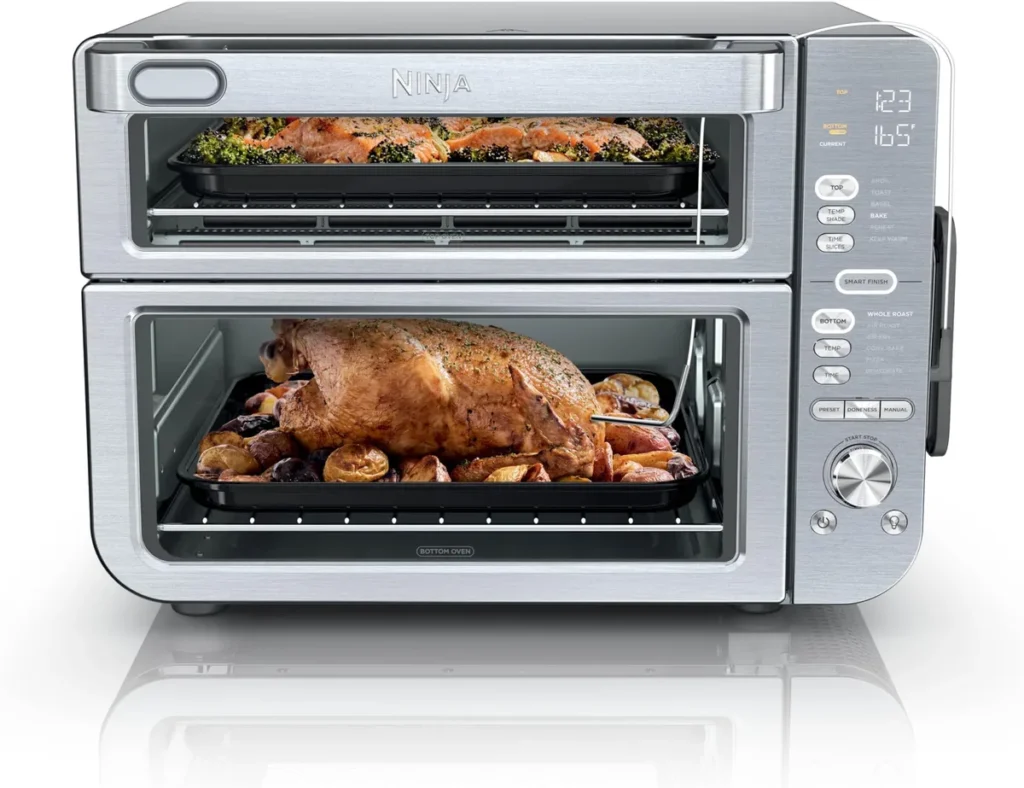
If you’ve ever stood at an oven wondering whether broil and air fryer are the same, you’re not alone. Both use high, dry heat. Both can crisp food.
But they go about it very differently. One relies on direct radiant heat from above. The other blasts food with fast-moving hot air.
A standard oven broiler runs somewhere between 500°F and 550°F. Most countertop air fryers hold a set temperature between 200°F and 400°F. That temperature gap is only part of the story.
The real difference comes down to airflow and where the heat hits your food.
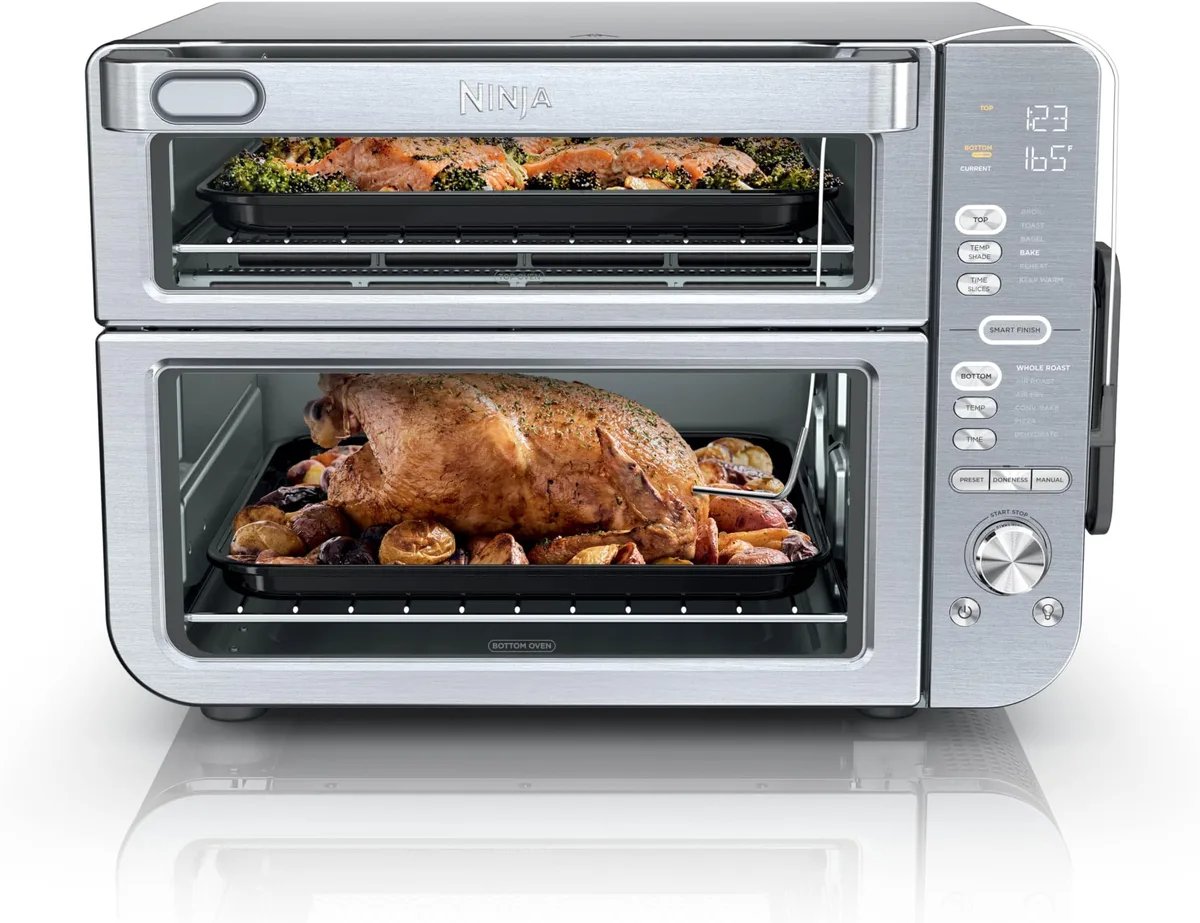
Image source: Web (Bing) / amazon.com (Web image (fair-use with source credit))
The Quick Answer: No, Broil and Air Fryer Are Not the Same
Broil and air fryer are not the same. Broiling uses direct radiant heat from above. An air fryer uses a heating element and a fan.
That fan blows hot air around food. The two methods create different textures and results.
How Broiling Actually Works in Your Oven
Broiling is a top-down cooking method. In a standard oven, the broiling element sits at the top of the cavity. When you switch to broil, that element glows red.
It emits intense infrared radiation.
The heat hits food from one direction only, from above. There is no fan involved. That’s a big deal, because it means broiling sears the surface quickly while the inside cooks more slowly.
You control the result mostly by moving the rack up or down.
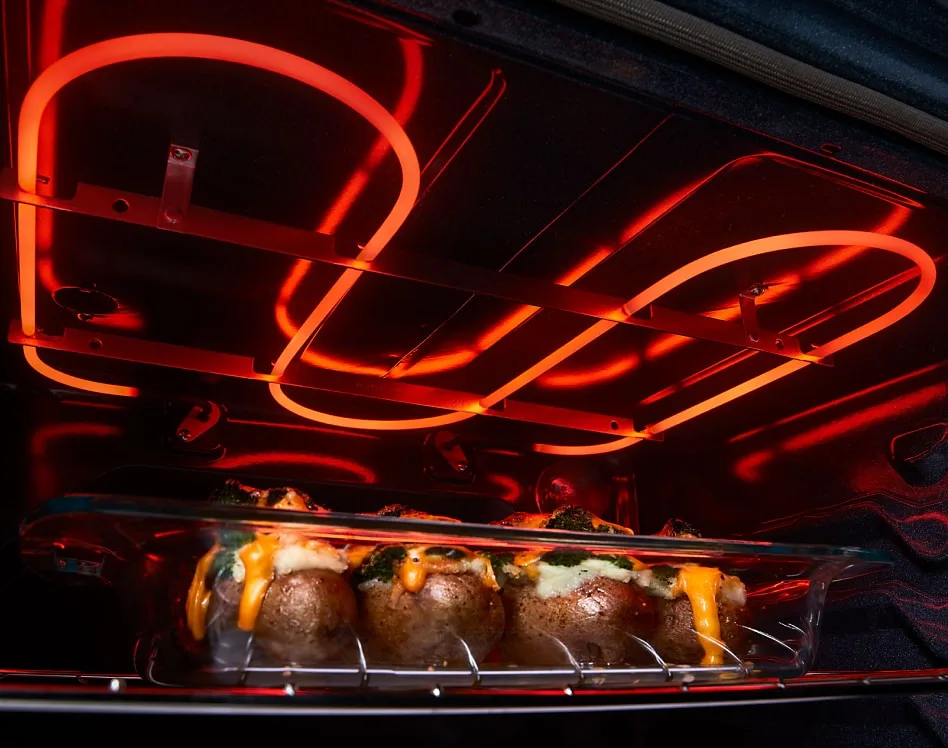
Image source: Web (Bing) / whirlpool.com (Web image (fair-use with source credit))
You want the food roughly 3 to 6 inches below the element for most jobs. Too close, and the outside burns before the middle is done. Too far away, and you lose that aggressive browning.
The heat is also fixed. Most home ovens only have a high and low broil setting. You don’t dial in a precise temperature the way you do with an air fryer.
This is why broiling demands constant attention. A minute can mean the difference between golden cheese and blackened crumbs.
Because the heat is so intense, cooking fires remain a leading home hazard. The National Fire Protection Association tracks residential cooking fires and consistently lists unattended cooking as a top cause. Broiling is no exception, especially with fatty cuts that can splatter.
Key traits of a broiler:
- Heat comes from above only
- No fan circulates the air
- Very high, mostly fixed heat
- Food sits on a broiler pan or sheet tray
- The rack position controls browning speed
- Requires close monitoring
You don’t need any special basket or insert. A simple sheet tray works, though a slotted broiler pan keeps meat out of its drippings and reduces smoke.
How an Air Fryer Cooks Food (It’s Not Just a Tiny Oven)
An air fryer is essentially a compact, high-speed convection oven. It has a heating element, usually near the top, and a powerful fan that shoves hot air around a narrow basket. That fast-moving air does most of the work.
The rush of dry heat strips surface moisture from food. This is what creates the crisp, blistered exterior you get from air frying. It also triggers the Maillard reaction, a chemical browning process that builds flavor through heat and natural sugars.
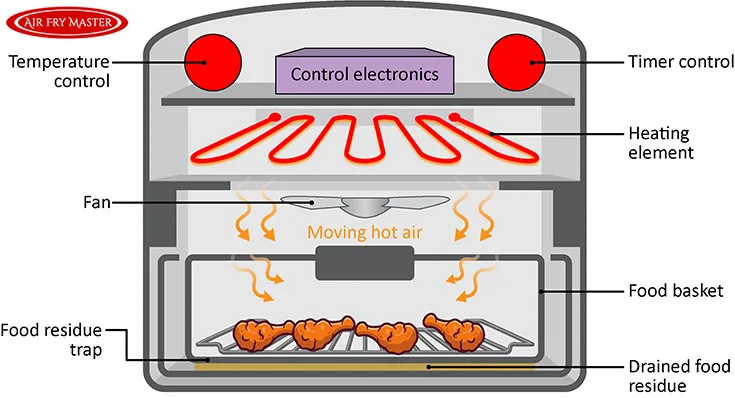
Image source: Bing (Web (fair-use with source credit))
Because the basket is small and the fan is strong, air fryers heat up fast. As of 2026, most entry-level models hold between 2.6 and 5.8 quarts. That capacity suits one to three people comfortably.
Larger batches need to be cooked in rounds.
You also get real temperature control. Air fryers typically adjust from 200°F to 400°F. That range makes them useful for more than frozen fries.
People roast vegetables, cook salmon, reheat pizza, and even bake small cakes in them.
Airflow is the key. If you pack the basket too full, the hot air can’t circulate and the food steams instead of crisping. This is why recipes tell you to arrange food in a single layer and shake or flip halfway through.
This is also why you need clearance around the unit so the hot exhaust has somewhere to go. If you use paper or silicone inserts, liner safety matters too, because anything blocking airflow changes how the food cooks.
Air fryers are efficient for small portions. The U.S. Department of Energy tracks home appliance energy use, and a small countertop cooker generally draws less than a full-size oven.
That’s part of why they’ve become popular in warm climates where heating up an oven is undesirable.
Broil vs. Air Fryer at a Glance: Key Differences That Actually Matter
The table below gets straight to the physical differences. These aren’t just technical specs. They change how food looks, feels, and tastes.
| Factor | Broil | Air Fryer |
|---|---|---|
| Heat source | Top-down radiant element | Heating element plus high-speed fan |
| Airflow | None, natural upward heat | Forced hot air circulation |
| Typical temp | 500°F to 550°F, fixed | 200°F to 400°F, adjustable |
| Browning style | Intense direct char | Dehydrated, even crispness |
| Best for | Thin proteins, melting cheese | Frozen foods, crispy coatings |
| Batch size | Large trays possible | Small to medium baskets |
| Attention needed | High, constant watching | Low to moderate, timer based |
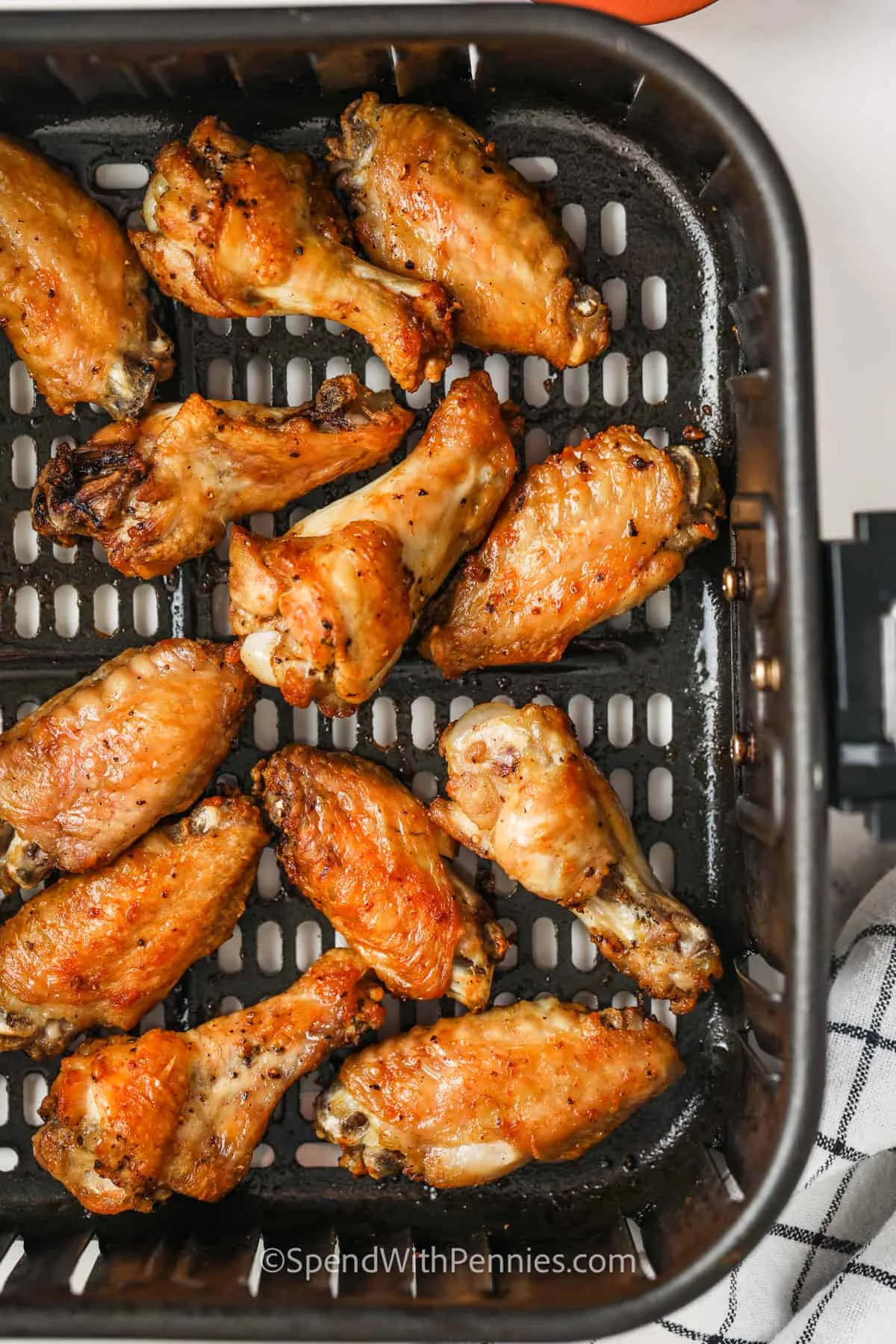
Image source: Web (Bing) / netzdot.de (Web image (fair-use with source credit))
Heat Source and Airflow
Broiling is purely radiant. The element glows and fires infrared energy directly at the food’s surface from above. There is no moving air.
An air fryer combines a heating element with a fan. The fan pushes hot air around the food from multiple angles. That forced air dries the surface and browns it without direct flame or element contact.
If you’ve used an oven’s air fry mode, the same idea applies. The fan speed is usually higher than standard convection, and the food sits in a perforated basket or on a mesh tray.
Temperature Control and Preheating
A broiler usually has one or two settings. Most ovens label them high and low. You can’t set 375°F and walk away.
An air fryer gives you a digital or dial temperature range. That control lets you cook delicate foods that would burn instantly under a broiler. Thick fish, pastries, or roasted garlic all fare better with moderate heat.
Both preheat quickly. A broiler needs a couple of minutes for the element to reach full glow. An air fryer often needs no preheat or just two to three minutes.
Texture and Browning Results
A broiler creates direct, intense browning on the top surface. It chars edges and melts cheese beautifully. The bottom of the food stays softer unless you flip it.
An air fryer creates a wrapped-around crispness. Hot air moves below, above, and around the food in the basket. The surface dehydrates and blisters.
It’s closer to frying than to broiling, though not exactly the same.
If you try to broil something that needs air frying, you can easily burn the top while the inside stays raw. If you air fry something that needs broiling, you lose that sharp, direct char. The methods don’t swap cleanly.
When Broiling Is the Clear Winner
Broiling wins when you want fast, direct, top-down heat. Thin cuts of meat and foods that need a scorched surface do best here.
Good broiler candidates include:
- Thin steaks, pork chops, and lamb loin chops
- Fish fillets with a quick marinade
- Chicken thighs with the skin spread flat
- Cheese-topped casseroles, gratins, and nachos
- Garlic bread and open-face sandwiches
- Charring peppers or tomatoes for salsa
- Finishing sous vide meat with a crust
In these cases, the heat doesn’t need to penetrate deeply. You want intense surface browning in a short window. A broiler gives that with no special appliance.
You’re already using your oven.
You also get larger batch capacity. A rimmed sheet pan under the broiler can hold more than most air fryer baskets. That’s helpful when you’re melting cheese over a tray of nachos or finishing a casserole for a crowd.
Of course, you have to stand there and watch. The line between beautifully charred and burnt is thin. But when you manage it right, broiling creates a flavor profile that an air fryer can’t easily imitate.
Broilers don’t bring the same countertop footprint or ventilation and placement question that a countertop air fryer does. You also don’t have to think about whether certain liners block airflow in the basket.
That said, broiling fatty foods can smoke. A proper vent hood helps. Keep the oven door cracked if your model recommends it, and never walk away from a broiling pan.
When the Air Fryer Leaves Broiling in the Dust
Air fryers excel at anything you want crisp on all sides without intense direct heat. Frozen foods are the classic example. French fries, chicken nuggets, fish sticks, and onion rings all come out golden with almost no oil.
A broiler would char the top while the middle stays frozen.
Reheating is another strong case. Leftover pizza, fried chicken, and roasted potatoes regain their crunch in an air fryer. The moving hot air pulls moisture away from the surface.
A broiler would just burn the toppings before the slice warmed through.
Air fryers also handle thicker proteins better at lower temperatures. Salmon fillets, chicken breasts, and pork tenderloin cook evenly without the constant turning a broiler demands. You set the temperature and timer, then walk away.
Precise temperature control helps with delicate foods too. You can roast garlic, bake small pastries, or crisp chickpeas at 325°F. A broiler’s fixed high heat would incinerate those items in under a minute.
Air fryers contain more mess as well. The enclosed basket traps splatter and odors. That means less smoke and less cleanup than a broiler pan full of burned drippings.
You still need to give the unit space for the hot exhaust to escape so it doesn’t overheat or damage cabinets.
Good air fryer candidates include:
- Frozen fries, tots, and breaded snacks
- Reheated leftovers that need recrisping
- Salmon and other medium-thick fillets
- Roasted vegetables you want dry and blistered
- Small-batch bacon with minimal grease spatter
- Home fries or breakfast potatoes
The Tricky Middle Ground: Recipes Where Both Kind of Work
Some foods can go either way, but the results differ enough that you should know which one you want. Roasted vegetables are a perfect example. Broiling gives you a sharp char on the top layer.
Air frying dries the exterior and crisps the whole surface more evenly.
Chicken wings fall into the same category. Under a broiler, the skin blisters and chars quickly. You must flip the wings and watch them closely.
In an air fryer, the skin renders and crisps while the meat stays moist. Many people prefer air fried wings because the texture is closer to deep fried.
Thin pork chops and boneless chicken thighs also work both ways. The broiler creates a steakhouse-style crust in minutes. The air fryer produces a more even browning and keeps the interior juicier.
Your preference decides the tool.
Here’s a quick guide:
- Want sharp char marks? Use the broiler.
- Want all-over crispness? Use the air fryer.
- Want minimal cleanup? Choose the air fryer.
- Want large batches at once? Go with the broiler.
- Want a smoky, grilled flavor? The broiler gets closer.
Neither method is wrong here. The choice comes down to the texture you’re after and how much attention you want to give the food.
Mistakes Everyone Makes When Trying to Swap One for the Other
The biggest error is treating these methods as interchangeable timing-wise. A recipe that says air fry at 400°F for 15 minutes cannot go under a 550°F broiler for 15 minutes. You’ll get a charred outside and a raw center.
Another common mistake is overcrowding. In an air fryer, food must sit in a single layer with gaps for air to move. Piling food in leads to steaming instead of crisping.
In a broiler, piling food too high in a pan creates uneven heat and soggy spots on the bottom.
Using the wrong pan causes trouble too. Broiler pans are shallow and slotted to drain fat. Air fryer baskets are perforated to let air flow.
If you line an air fryer basket with solid paper or foil, you block the very mechanism that makes it work. That’s why anything that restricts air movement needs careful thought before you use it.
Other swap-related mistakes:
- Broiling frozen food directly, expecting it to cook through
- Air frying thick steaks, then complaining they lack a crust
- Leaving the oven door closed while broiling some older models
- Not preheating the broiler, so the element never reaches full intensity
- Forgetting to flip food in either method and getting uneven results
Pro Moves to Nail Your Timing, Doneness, and Cleanup
Small habits make a big difference. For both methods, start with food that’s as dry as possible. Pat meat dry with paper towels.
Excess surface moisture fights browning.
Broiler Tips That Prevent Smoke and Burnt Offerings
Position the rack before you preheat. Aim for 4 to 6 inches below the element for most items. For quick melting or charring, move it up to 3 inches.
Use a slotted broiler pan to keep meat out of pooled fat. That reduces smoke and flare-ups.
Keep the oven door cracked if your manufacturer allows it. This helps prevent the element from cycling off when the oven gets too hot. It also lets moisture escape instead of steam-bathing your food.
Set a timer for half the estimated time. Then check. Flip or rotate the pan if needed.
The last minute matters most, so stay close.
Clean the broiler pan while it’s still warm but not hot. A soak in hot soapy water softens burned drippings. For the oven interior, wipe splatters once the cavity cools to prevent next-time smoke.
Air Fryer Habits That Keep Food Crispy, Not Dry
Preheat the basket for three minutes if your model recommends it. This gives an initial blast of dry heat. Arrange food in a single layer.
Don’t nestle pieces together.
Shake the basket or flip food halfway through. That exposes every surface to the moving air. If you’re cooking something fatty, you can spray lightly with oil.
Lean items benefit from a tiny coating too.
Wash the basket after each use. Baked-on residue blocks airflow and adds stale flavors. Many baskets are dishwasher safe, but hand washing often preserves the nonstick coating longer.
Keep the area around the intake and exhaust vents clear. That means not pressing the unit against a wall or cabinet. Good airflow through the machine keeps temperatures steady.
Safety Heads-Up: Fire, Fumes, and Hot Surfaces
Both methods produce high heat. Both need respect.
Broiling risks: grease splatter can ignite if it drips onto the element. Never line the bottom of your oven with foil. That traps heat and increases fire risk.
Stay in the kitchen while broiling. Use a proper vent hood or open a window because smoke is common.
Air fryer risks: the exterior gets very hot. Keep the unit on a heat-safe surface, not under low cabinets or near paper towels. Never plug it into an overloaded outlet.
Check the basket coating if you have concerns about nonstick materials. Most modern units are PFOA-free, but older models may differ.
For either method, keep a fire extinguisher nearby. Never pour water on a grease fire. If a fire starts in the oven, turn off the heat and keep the door closed until it dies out.
If it’s in the air fryer, unplug it if you can safely do so and leave the basket closed.
Children should stay at least three feet away from both. The basket and the broiler door both stay hot long after cooking stops. Teach kids to treat them like the stovetop.
So, Can You Substitute Broil for Air Fry? A Real-World Decision Guide
Short answer: rarely. Broil works when you need a direct, top-down char on thin food. Air frying works when you need moving hot air to crisp every surface.
The two are not drop-in replacements.
If a recipe calls for air frying, broiling usually burns the exterior before the inside cooks. If a recipe calls for broiling, air frying often leaves you with a soft top and no real crust. The heat mechanics are just too different.
The only consistent swap zone involves thin, dry items that only need surface browning. Toasted open-face sandwiches, quick-melt cheese, or charring peppers can work in either. For everything else, stick to the tool the recipe assumes.
FAQs You’re Probably Arriving With
Can I use my oven’s air fry mode to broil instead?
No. An oven air fry mode uses a fan to circulate hot air. Broiling is direct radiant heat with no fan.
They produce different textures. Some ovens let you combine broil and convection, but that’s still not the same as air frying.
What happens if I broil frozen fries?
You get burnt tops and frozen centers. Broiling only heats from above with no air circulation. Frozen fries need all-over hot air to cook through and crisp.
An air fryer or convection oven handles that. The broiler does not.
Does an air fryer broil setting exist?
Some toaster-oven-style air fryers include a broil function. That setting disables the fan and fires the top element. In those units, the broil mode behaves like a standard oven broiler.
A basket-style air fryer cannot broil because it lacks a dedicated top element with no fan.
Which is healthier, broiling or air frying?
Both require little to no added oil. Air frying can render slightly more fat out of foods because the forced air carries drippings away. Broiling allows fat to pool beneath the food unless you use a slotted pan.
The difference in fat content is small either way.
Why does my air fryer smoke more than my broiler?
Your air fryer likely has built-up residue on the heating element or the basket. Broilers burn off splatter at extremely high heat. Air fryers run cooler, so grease can accumulate and smoke over time.
Clean the interior and basket after each use to prevent it.
Can I finish sous vide steak in an air fryer instead of a broiler?
You can, but the crust will be different. A broiler creates intense, direct char in under two minutes. An air fryer produces a more even all-over browning.
Many people prefer the broiler for steak because it mimics a grill’s heat. The air fryer works, but the result is less steakhouse-style.


