

If you’ve ever asked what’s the difference between air fry and bake, you’re not alone. Both use hot air to cook food. They even sound like they should be nearly the same thing.
But the results can be wildly different.
Air fryers preheat in roughly 2 to 5 minutes. A conventional oven takes 10 to 20 minutes to come to temperature. That gap alone explains why one method feels like a weeknight hack and the other feels like a Sunday project.
But the real difference goes deeper than speed.
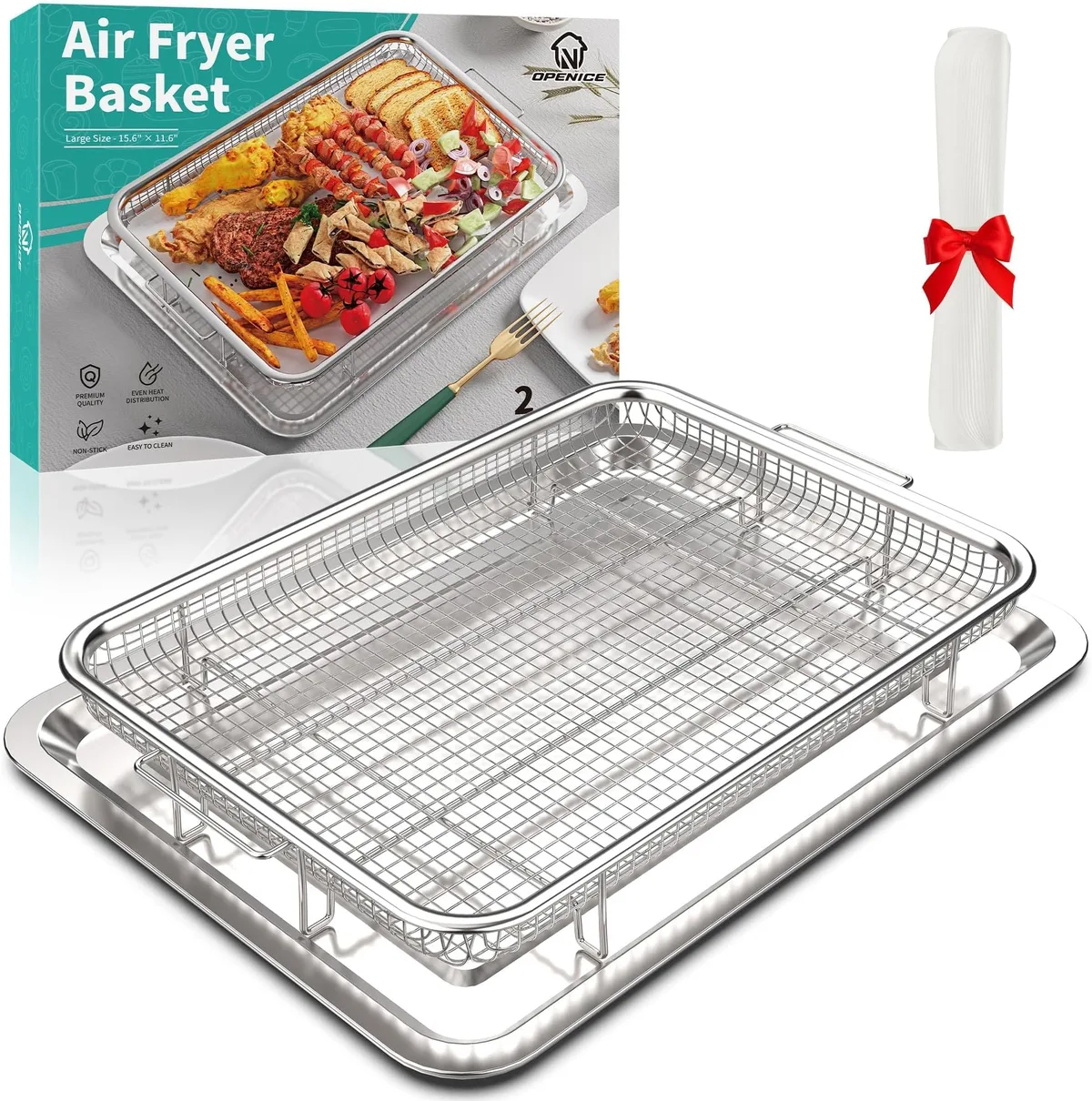
Image source: Web (Bing) / amazon.com (Web image (fair-use with source credit))
Quick Answer
Air frying is a faster, more intense form of convection baking. It uses a powerful fan and a small cooking space. That creates hotter, faster-moving air.
The result is a crispier, browner outside. Baking uses gentler, more even heat. It works better for delicate foods and larger batches.
Why “Air Fry” Gets Quoted Like a Fancy Term When It’s Really Just a Tiny, Angry Convection Oven
The word “air fry” sounds like a revolution. In reality, it’s a marketing name for a specific type of convection cooking. A dedicated air fryer uses a heating element and a high-speed fan.
That fan blasts hot air around a small basket. The air moves fast. The space is tight.
Food gets hit with intense heat from every direction at once.
A standard bake setting in a conventional oven does not use a fan at all. It relies on still air, plus top and bottom heating elements. Heat rises and falls naturally.
That gives an even, gentle environment. If your oven has a convection bake setting, you already have a bigger, slower version of an air fryer. The key difference is airflow speed.
Air fryers move air so quickly that they strip surface moisture faster. That’s what creates the shattering, fried-like crust.
So when someone tells you an air fryer “fries” food, they’re not wrong about the texture. But no hot oil is involved. It’s dry heat.
It’s convection. It’s just convection on turbo mode.
What Actually Happens Inside an Air Fryer vs. a Baking Oven
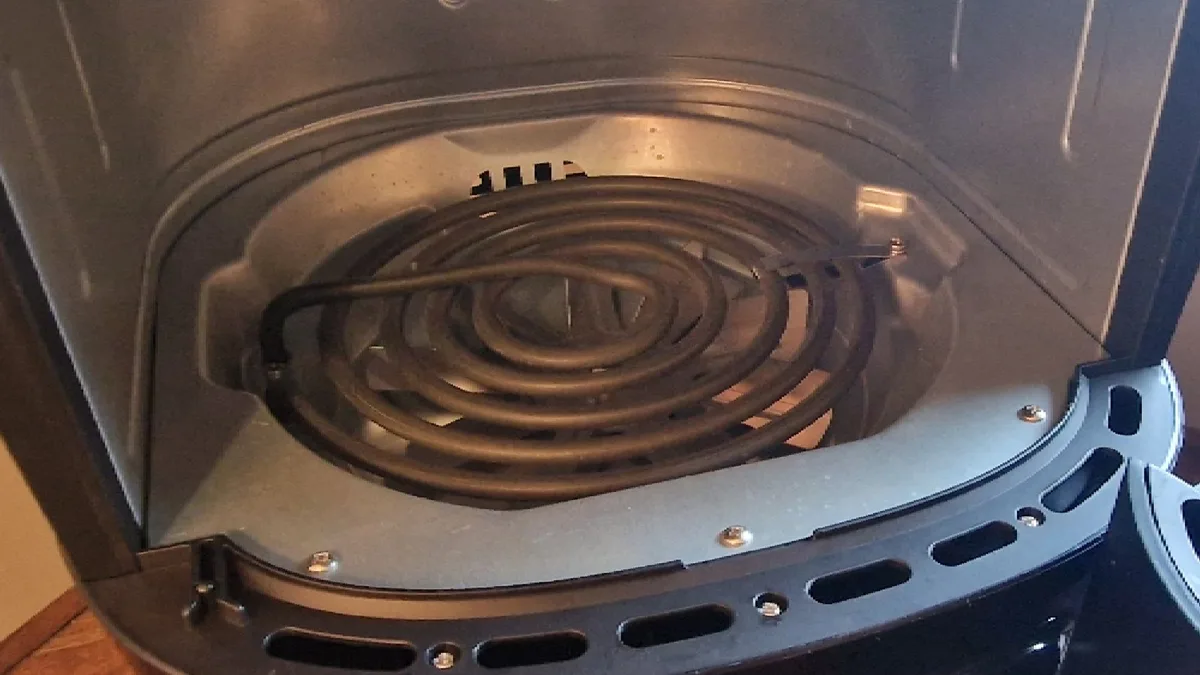
Image source: Web (Bing) / storage.googleapis.com (Web image (fair-use with source credit))
The Setup Difference: A Basket and a Blowtorch Fan vs. a Big Box with Gentle Heat
An air fryer is basically a small chamber with a heating coil on top and a fan directly below it. The food sits in a perforated basket. Air blasts down, hits the food, bounces off the basket walls, and comes back around.
There’s almost no dead space. In a bake oven, you have a large metal box. Heat comes from the top and bottom elements.
Without convection, the air barely moves.
That small chamber matters. Because the air fryer has only a few quarts of space, the fan doesn’t need to work hard to fill every corner with hot air. The food is always close to the heating element.
Browning happens fast.
How Airflow Speed Changes Everything About Texture and Browning
High-speed airflow removes moisture from the surface of food quickly. That dry surface is what browns. It’s the Maillard reaction.
The same chemistry that makes a steak crust on a hot skillet also works in an air fryer. But in a standard bake oven, surface moisture lingers longer. The food steams a little before it browns.
That’s why baked fries often come out pale and soft unless you crank the heat or flip them multiple times.
The air fryer’s rapid airflow creates a dry, skin-tight crust on proteins like chicken wings or salmon. Baking, especially on a lower rack, keeps more moisture locked inside. Neither is always better.
It depends on the food.
| Factor | Air Fryer | Bake (No Convection) |
|---|---|---|
| Air movement | Fast, cyclonic | Virtually still |
| Surface drying | Very fast | Slow |
| Crust texture | Crisp, shattery | Soft, tender |
| Moisture retention | Lower | Higher |
| Best for | Fries, wings, reheating | Cakes, custards, bread |
Moisture Evaporation Rates and Why They Decide Whether Food Gets Crispy or Stays Tender
Moisture loss is the hidden variable. Air frying pulls water out of food faster. That’s great for a dry, crispy shell.
It’s terrible for a cheesecake. In a bake oven, the gentle heat lets proteins coagulate and starches set before the outside turns to leather. Some foods need that slow buildup.
Others love the aggressive dehydration.
If you want a visual for this, think of a sponge drying in front of a fan versus a sponge sitting on a warm counter. The fan-dried sponge gets stiff and crusty on the outside. The counter-dried sponge stays soft.
Same idea applies to food.
Where Bake Mode Wins: Delicate Doughs, Custards, and Anything That Needs Still Air
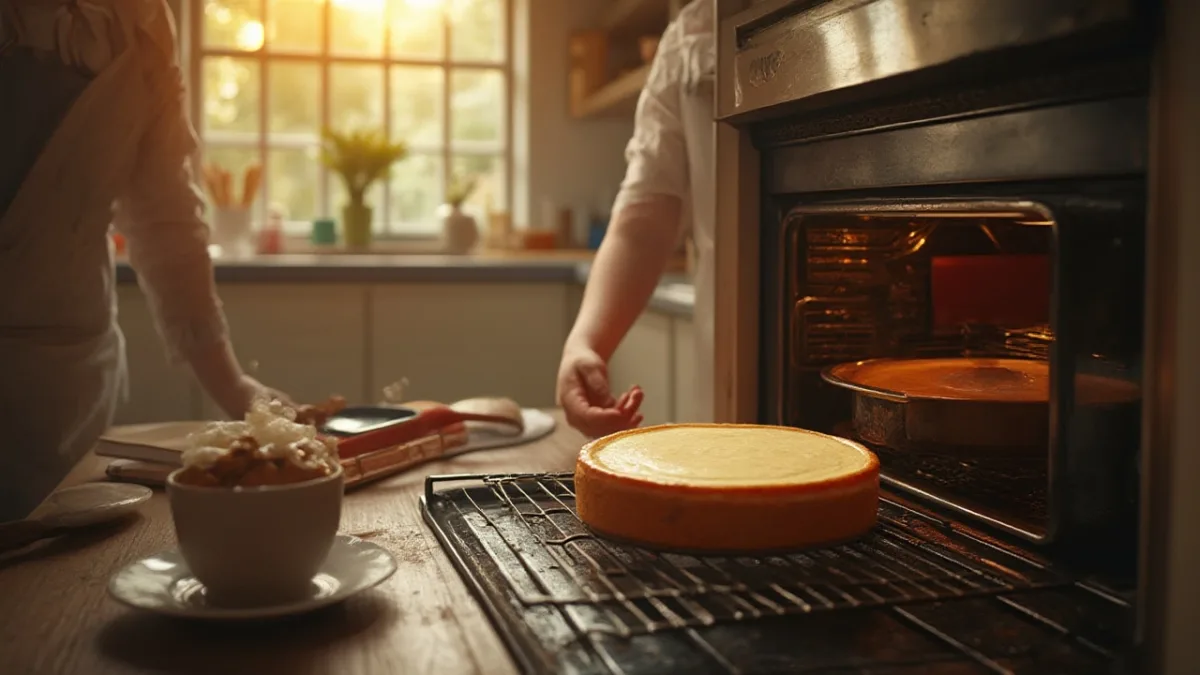
Image source: Web (Bing) / cakeandpop.co.uk (Web image (fair-use with source credit))
Bake mode is not just a slower air fryer. It does things an air fryer cannot do. Cakes, quick breads, custards, cheesecakes, and soufflés all rely on still, even heat.
The batter needs time to rise before the surface sets. A violent fan would whip the top layer and create lopsided domes.
A cheesecake baked in an air fryer would likely crack or brown unevenly. The high airflow would dry the surface too quickly. The center would still be liquid.
You can technically bake small cakes in an air fryer, but the texture will never match a conventional oven. The crumb will be tighter and the outside more crusted.
Sourdough, brioche, and any yeast bread with a delicate structure also prefer bake mode. A sudden blast of hot air can set the crust before the dough has fully expanded. That means a dense loaf.
If you want an airy crumb and a thick, crackly crust, you want a standard bake. A convection setting may work for some rustic loaves, but plain bake is the safer starting point.
Why Your Weeknight Fries, Wings, and Leftover Pizza Crave an Air Fryer
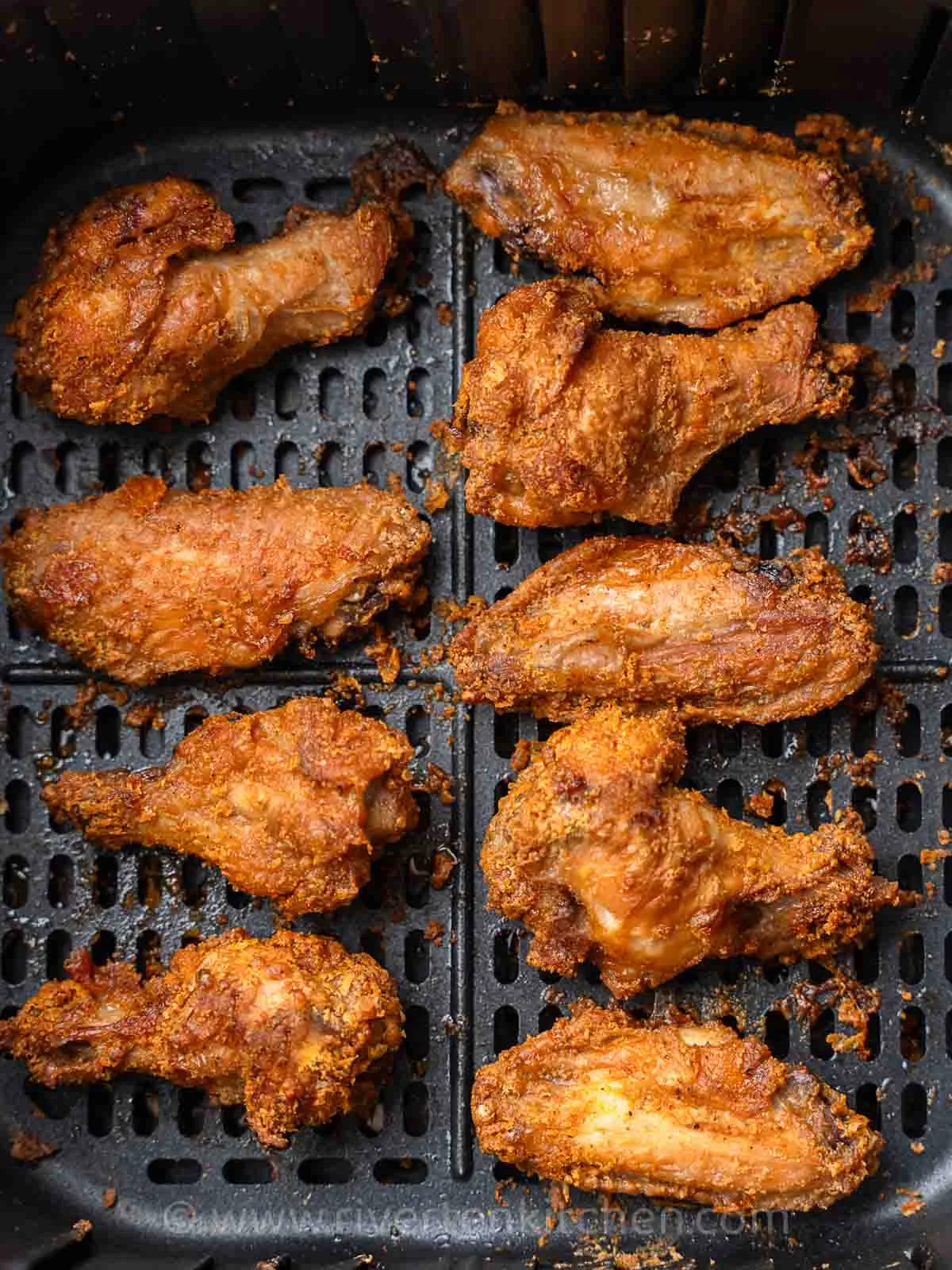
Image source: Web (Bing) / rivertenkitchen.com (Web image (fair-use with source credit))
For everyday crispy food, the air fryer is unbeatable. Frozen fries, breaded chicken tenders, fish sticks, samosas, and leftover pizza all come back to life in an air fryer. That’s because the high-speed air reheats the food and re-crisps the coating in one pass.
An oven can do that too, but it takes twice as long and heats the whole kitchen.
Chicken wings are the classic example. A pound of wings in a basket air fryer at 400°F takes about 18 to 22 minutes. The skin gets deeply golden and shatters when you bite.
In a conventional oven at 425°F, the same wings take 35 to 45 minutes and still might not get as crisp. The air fryer also renders more fat out of the skin, which means less greasy residue.
Reheating fried food is where the air fryer truly shines. A slice of leftover pizza goes from sad and limp to crisp-crusted in 3 to 4 minutes. The oven takes 10 minutes and often leaves the bottom soggy.
If you only use an air fryer for reheating, it already earns its counter space.
One safety note if you’re new to air frying: keeping your basket liners food-safe matters. Cheap liners can block airflow, which ruins the whole point.
The “Don’t Even Think About It” List: Foods That Flop in Each Method
Some foods are so wrong for a method that trying them feels like a prank. It’s not that you can’t cook them. You just won’t like the result.
Foods That Hate Turbulent Air
- Custards and flans: The fan will ripple the surface and break the set.
- Cheesecake: It cracks, overbrowns, and dries at the edges.
- Angel food cake: The batter needs to cling to the pan and rise. A fan will knock it down.
- Delicate fish en papillote: The parchment pouch inflates and bursts.
- Anything dusted with powdered sugar before baking: The sugar flies everywhere and burns.
- Soufflés: They need calm heat to rise straight up. Turbulence deflates them.
If a recipe depends on a stable, undisturbed rise, keep it in the bake oven. The air fryer basket is not a gentle environment.
Foods That Hate Slow, Static Heat
- Breaded frozen snacks meant for deep frying: They come out dry and pale without rapid airflow.
- Thin-cut fries: They steam instead of crisp.
- Leftover pizza: The crust goes chewy and the cheese turns to rubber.
- Chicken wings: They take forever and rarely get crackly skin.
- Small batches of roasted vegetables: They’ll soften, but you won’t get those charred, crispy edges.
The rule is simple. If you want a crust, pick air fry. If you want structure, pick bake.
For those in-between foods, convection bake can split the difference. But it still won’t match a dedicated air fryer for pure crispiness.
One more practical point for air fryer owners: checking the clearance above your unit prevents heat damage. The vent needs space to push hot air out. Tucking it tight under a cabinet can warp the cabinet and starve the fryer.
Convection Bake vs. Air Fryer: The Sibling Rivalry That Confuses Everyone
Convection bake and an air fryer both use a fan to move hot air. That’s where the similarities end. Convection bake is a setting on your full-size oven.
The fan distributes heat more evenly, but the chamber is huge. The fan speed is relatively low. An air fryer, by contrast, crams a much faster fan into a space no bigger than a shoe box.
The result is a difference in intensity. Convection bake speeds up baking by about 25 percent. It is excellent for roasting vegetables, cookies, and sheet pan meals.
Air frying takes that further. The compact basket means the air has nowhere to go. It hits food from all angles at once.
That rapid air flow dries the surface fast. It creates a crust convection bake alone cannot match.
When Your Oven Already Has a Fan, Do You Still Need a Separate Air Fryer?
You don’t strictly need one. But a convection oven cannot replicate the air fryer’s speed and crunch. The fan in a convection oven is designed for even baking, not aggressive dehydration.
You can boost crispiness by using a wire rack on a sheet pan. Still, the oven takes longer to preheat. It uses more electricity.
It heats the kitchen in summer.
If you cook for one or two people and crave crispy food often, a dedicated air fryer pays for itself in convenience. If you rarely cook frozen fries or reheat fried chicken, convection bake is probably enough.
The Wire Rack Hack That Gets You 90% of the Way There
Place an oven-safe wire rack on top of a baking sheet. Arrange food in a single layer. Set your oven to convection bake at a temperature 25°F lower than the recipe calls for.
The rack lifts food off the pan. Air circulates underneath. That mimics the perforated basket of an air fryer.
It works well for fries, chicken strips, and roasted vegetables. It won’t match the sheer speed of a purpose-built air fryer. But if counter space is tight, this is a solid compromise.
Side-by-Side: Air Fry vs. Bake Specs and Real-World Timing
The numbers tell a clear story. Air fryers operate in a narrower temperature band but deliver heat more aggressively. Ovens take longer to start and longer to cook, but they handle volume and delicacy better.
| Metric | Air Fryer | Conventional Bake Oven |
|---|---|---|
| Preheat time | 2–5 minutes | 10–20 minutes |
| Typical cooking temp | 325°F–400°F | 350°F–450°F or higher |
| Frozen fries cook time | 10–12 minutes | 22–28 minutes |
| Chicken wings cook time | 18–22 minutes | 35–45 minutes |
| Capacity | 2–10 quarts | 5+ cubic feet |
| Energy per session | ~0.3–0.5 kWh | ~2–3 kWh |
| Best for | Small batches, crisp | Large meals, baked goods |
These times are from manufacturer instructions and aggregated recipe data as of 2026. Air fryer times assume a single layer of food with no overcrowding. Baking times assume a standard preheated oven with food on the middle rack.
Recipe Conversion Made Simple: From Oven Instructions to Air Fryer Temperatures
Converting a baking recipe to an air fryer is straightforward. You lower the temperature and shorten the time. Start with a 25°F reduction.
If a recipe calls for 400°F in a conventional oven, set the air fryer to 375°F. Then cut the cooking time by 20 to 30 percent. Check for doneness early.
A tray of frozen crinkle-cut fries that needs 25 minutes at 425°F in the oven will likely finish in 12 to 14 minutes at 390°F in an air fryer. For proteins like chicken breast, use an instant-read thermometer to confirm an internal temperature of 165°F. That’s the safe minimum per the USDA.
Baked goods are trickier. Small cakes and brownies can work in an air fryer, but line the basket with a heat-safe pan. Avoid anything that relies on a delicate rise.
If you try a recipe and the outside browns before the center sets, tent it loosely with foil and lower the temperature by another 15°F. Air fryers are less forgiving because the airflow is so direct.
Common Mistakes That Leave You with Soggy Centers or Burnt Edges
Overcrowding the Basket
Air fryers need space. The fan cannot circulate if food is piled on top of itself. A single layer with a little room between each piece is essential.
When the basket is too full, the bottom pieces steam instead of crisp. That leads to soggy fries and raw spots on proteins. Cook in batches if you have to.
Treating Air Fryer Time Like Bake Time
Don’t set a timer and walk away the way you might with an oven. Air frying moves fast. A two-minute oversight can turn golden-brown into charred.
Shake the basket or flip the food halfway through. That compensates for the powerful top-down heat. Check doneness early, especially the first time you try a recipe.
Opening the Oven Door Like a Revolving Door
Standard baking needs stable heat. Every time you open the oven door, the temperature drops significantly. That extends cooking time and can cause cakes to collapse.
Open the door only when you absolutely need to check or rotate. For air fryers, pulling the basket out to shake is expected because the chamber recovers temperature almost instantly.
The Energy, Heat, and Cleanup Trade-Off Nobody Talks About Until Summer
An air fryer uses a fraction of the energy a full-size oven consumes. A typical baking session draws 2 to 3 kilowatt-hours. An air fryer run uses roughly 0.3 to 0.5 kilowatt-hours.
That means lower electricity bills and less strain on your HVAC system. In hot weather, an oven can make the kitchen uncomfortable for hours. An air fryer vents less waste heat into the room.
Cleanup favors the air fryer for greasy foods. Most baskets are nonstick and dishwasher-safe. A wipe-down takes seconds.
An oven needs more work. Grease spatters coat the walls. Self-cleaning cycles help, but they use high heat and produce odors.
There is a noise trade-off. Air fryers run between 55 and 65 decibels, roughly the level of a conversation. Some people find the fan sound grating.
An oven is silent. For late-night cooking or open-plan living spaces, that hum can matter.
If you’re using liners to speed up cleanup, check that they’re physically safe for your specific model. Some liners can block airflow and defeat the whole purpose of rapid air circulation. Also, make sure your air fryer has enough ventilation clearance to push out hot air without damaging cabinets.
When You Should Own Both and When You’re Fine with One
If your oven already has convection bake and you rarely cook frozen finger foods, you may not need a separate air fryer. The wire rack hack covers most crisp-craving meals. But if you cook for one or two people, want fast weeknight wings, or reheat fried food often, a dedicated unit earns its spot.
Air fryers preheat in minutes and use less energy. Ovens handle delicate bakes and feed a crowd. Keep both if you have room.
If you only have one, match the tool to the food. And leave space for the vent to breathe if you place an air fryer on the counter.
FAQs That Get to the Point
Is air frying healthier than baking?
Air frying does not magically make food healthier. It can reduce added oil compared to deep frying. Baking uses no added oil either.
Both methods rely on dry heat. The health difference depends on what you cook.
Can I use aluminum foil in an air fryer?
Yes, if you secure it well. Loose foil can fly into the fan and burn. Perforated parchment liners are safer.
Any liner you use should not block the fan.
Why does my baked chicken never get crispy?
Standard bake mode keeps surface moisture too high. That prevents browning. Use convection bake with a wire rack.
Or finish under the broiler for 2 to 3 minutes. The air fryer solves this by stripping moisture fast.
Does air frying dry food out?
It can if you overcook it. The fast airflow removes surface water quickly. That is what creates crispness.
But it also pulls interior moisture faster than baking. Check food a few minutes early. Use a thermometer when unsure.
The Final “Which One Tonight” Decision Guide
For anything that should crunch, reach for the air fryer. Fries, wings, breaded cutlets, leftover pizza. For anything delicate or large, use the oven.
Cakes, breads, casseroles, whole roasts.
When speed and cleanup matter most, the air fryer wins. When volume and structure matter most, bake wins. Most homes benefit from having both.
If you only have one, match the method to the food. And always keep safe clearances above the vent when running any hot appliance.


