
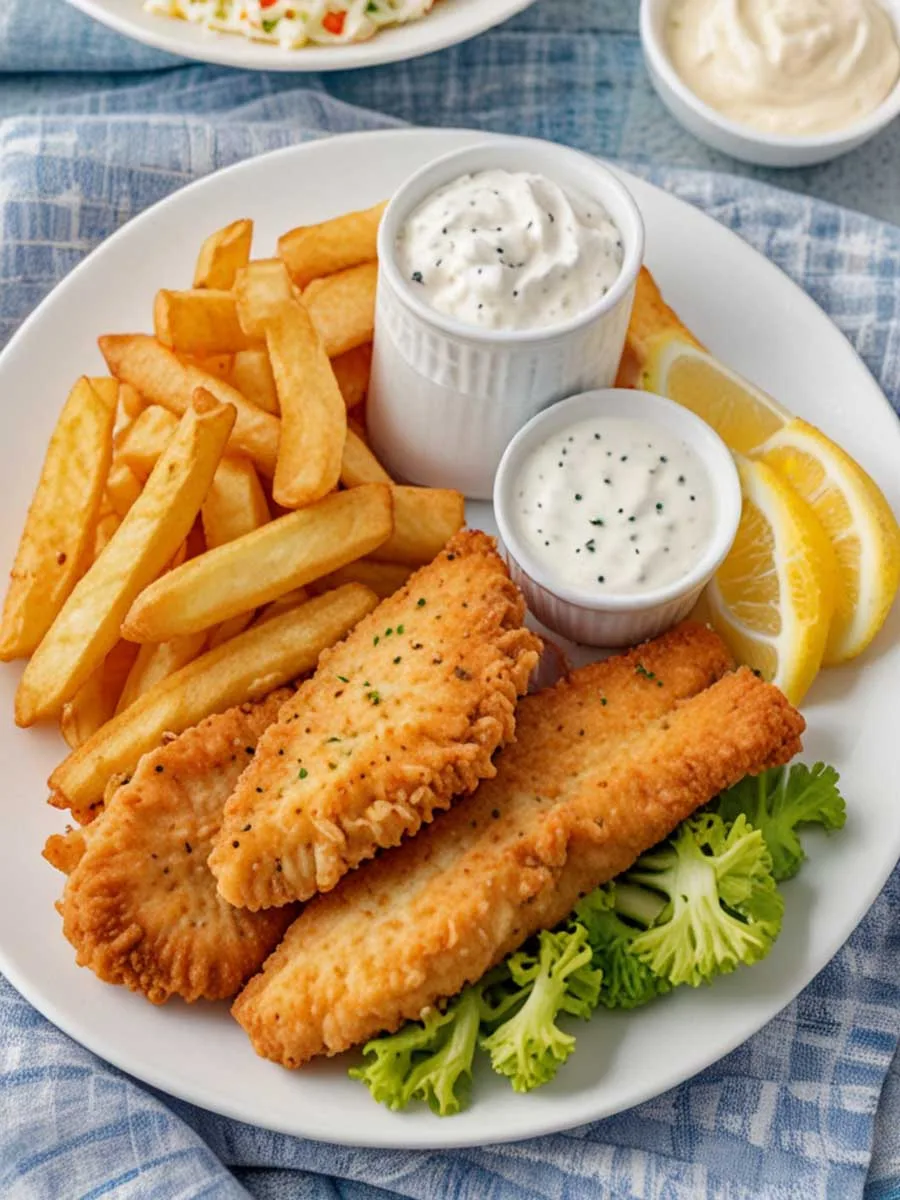
So you’re wondering, can you air fry battered fish? The short answer is yes, but it depends on how the fish is battered. A frozen pre-battered fillet behaves differently than a fillet you’ve just dipped in wet beer batter at home.
That distinction is the difference between a crisp, golden meal and a soggy mess stuck to the basket.
Frozen battered fillets are engineered to handle the environment inside an air fryer. They come out crunchy and flaky at 400°F in about 12 to 15 minutes. Homemade wet batter, on the other hand, can drip straight through the grate before it sets.
If you don’t handle it right, you’ll end up with bare, dry fish and a pool of half-cooked batter in the bottom tray. Let’s walk through exactly when it works, when it fails, and how to get it right every time.
Quick Answer
Yes, you can air fry battered fish. Frozen pre-battered fillets work reliably. Homemade wet batter needs extra steps.
Chill the coated fish first. Use parchment paper. Cook at 375°F to 400°F.
A light oil spray helps browning. The fish must reach 145°F inside.
Can You Air Fry Battered Fish? The Honest Answer
The question isn’t really “can you?” It’s “should you, given what you’re starting with?” Air fryers excel at crisping foods that already have a dry coating or a frozen, par-fried shell. If you’ve got a box of frozen battered fillets in your freezer, you’re in luck. Those fillets come pre-fried and flash-frozen.
The batter is partially cooked and stable enough to sit on the air fryer basket without falling apart. Think of popular brands like Gorton’s, Van de Kamp, and Birds Eye. Their battered fish is designed to go straight from the freezer into a hot air fryer.
Homemade batter is a whole different story. When you dip a raw fillet into a classic beer batter or tempura mix, the coating is liquid and loose. Hot air moving at high speed can blow the unbaked batter right off the fish.
The dredge drips through the holes and burns on the heating element before it even has a chance to set. That’s why so many people believe battered fish and air fryers don’t mix. They do, but only if you tweak your technique.
That means a thicker batter, a brief chill in the fridge, and a perforated parchment liner to catch the drips while still letting air circulate.
The cheat code here is simple: frozen battered fillets are plug-and-play. Homemade battered fish is completely doable but requires a small workflow change. Both paths lead to crispy results with a fraction of the oil you’d use in a deep fryer.
If you’ve ever pulled off a batch of perfectly cooked beef in an air fryer, you already know the machine can handle proteins beautifully. Now we just need to adapt the coating.
What Actually Happens to Wet Batter in an Air Fryer
An air fryer is basically a compact convection oven. A heating element sits above the food, and a powerful fan blows hot air down and around the basket at high speed. That airflow is exactly what makes foods crisp.
It’s also what turns a wet batter into a disaster if you aren’t prepared.
Picture this. You dip a fillet in batter and lay it directly on the basket grate. The batter starts out as a thick liquid clinging to the fish.
Within seconds of the fan kicking in, the top of the batter begins to dry and form a skin. That’s good. But the underside is still wet and pressed against the metal mesh.
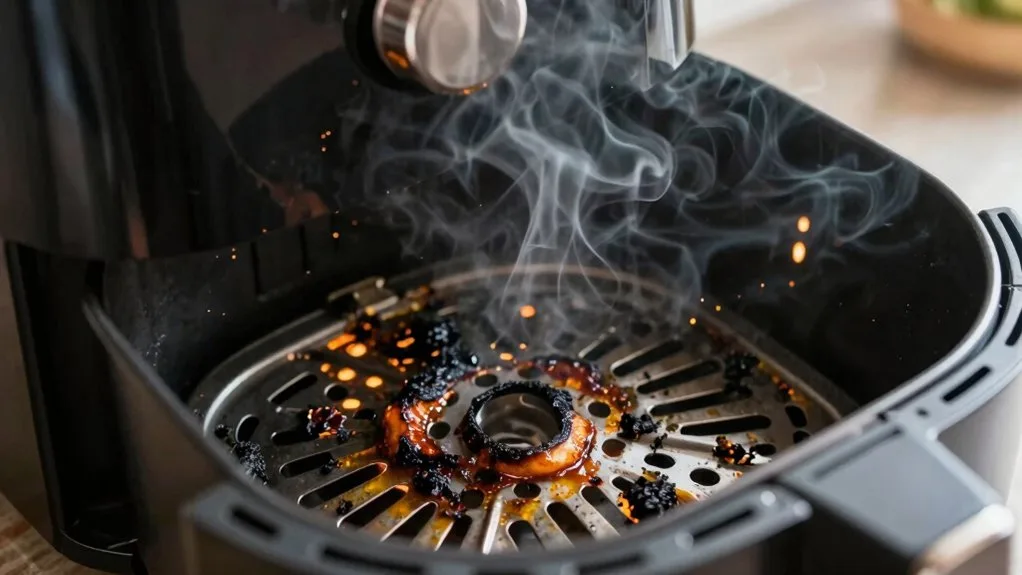
Gravity and vibration from the fan cause the raw batter to ooze through the holes. Drips fall onto the hot drip tray or heating coils below. Those drips smoke, burn, and set off your kitchen alarm.
Meanwhile, the fish itself now has bare spots with no coating at all. What’s left on top might look golden, but underneath it’s either stuck to the basket or missing entirely.
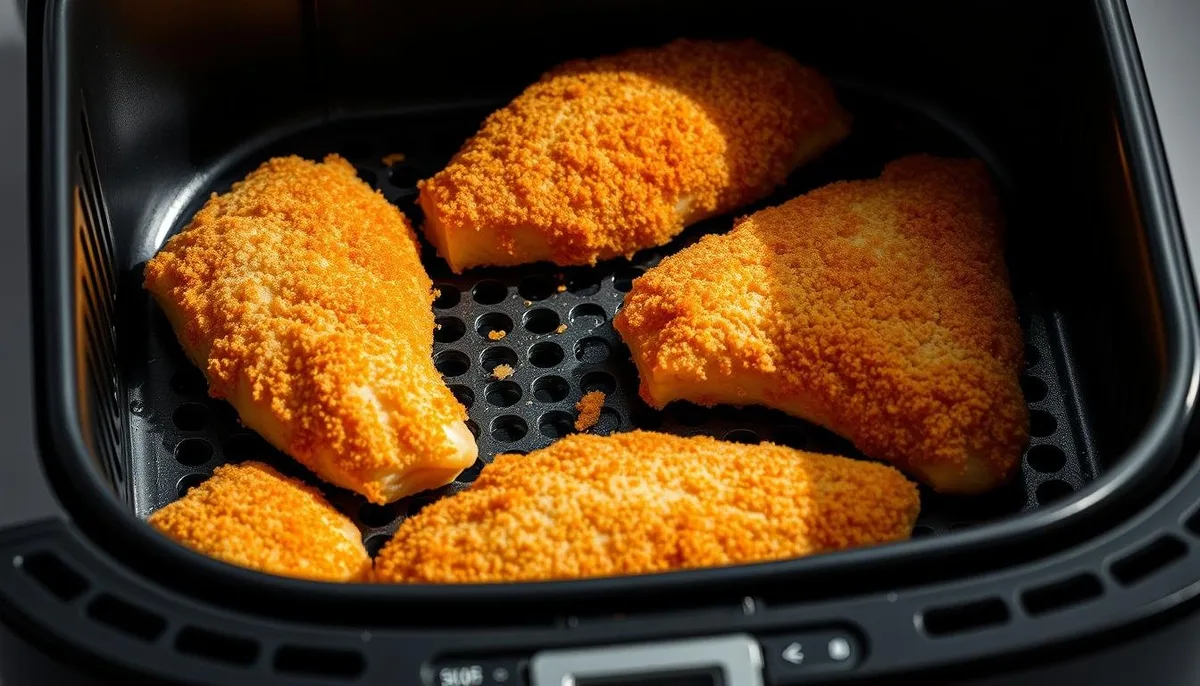
Temperature plays a huge role here, too. Wet batter needs a fast heat shock to set quickly. If you start at too low a temperature, the batter will slowly run downward before it firms up.
A preheated air fryer at a minimum of 375°F is essential. Even better, 400°F for the first few minutes gives the outside a rapid-set crust that locks the batter in place.
The solution is twofold: you need to make the batter less runny and you need a barrier between the drips and the basket. Chilling the battered fish for 10 to 15 minutes before it goes into the air fryer firms up the coating. The cold batter resists sliding off and sets faster when it hits the heat.
Perforated parchment paper liners, which you can find in most grocery stores or online, are the second half of the fix. They let air through while catching the little bit of batter that still tries to escape. Without these two adjustments, wet batter in an air fryer is a roll of the dice.
First Decision: Frozen Battered Fillets vs Homemade Wet Batter
Your entire approach changes based on what’s in your hand. Let’s treat this as a clear fork in the road.
Frozen Pre-Battered Fillets
These are the easiest path to air fried fish and chips. The fillets have already been battered, par-fried, and frozen. The batter is set and just needs to be reheated and crisped.
All you really have to do is arrange them in a single layer and let the air fryer do its job.
There’s no dripping issue. The coating won’t slide off. You don’t even need parchment paper unless you want zero cleanup.
The results are consistently good, with a crunch that’s somewhere between oven baking and deep frying. The main limitation is you can’t control the batter recipe, salt level, or oil quality. But for a weeknight dinner, frozen battered fish hits the mark every time.
Fresh Beer Batter or Tempura Batter
This is the hands-on route that gives you full control over flavor and ingredients. You pick the fish, you mix the batter, and you handle the entire process. The trade-off is you have to manage the wet batter problem we just covered.
If you’re willing to chill the fish, use a parchment liner, and possibly flip the fillets halfway through, you’ll get a genuinely remarkable result. The crust tastes fresh, light, and crisp. The fish inside steams perfectly in its own moisture.
The decision tree here is straightforward. If you want speed and predictability, grab the frozen box. If you’re after a from-scratch meal and don’t mind an extra 15 minutes of prep and chill time, fresh batter is worth the effort.
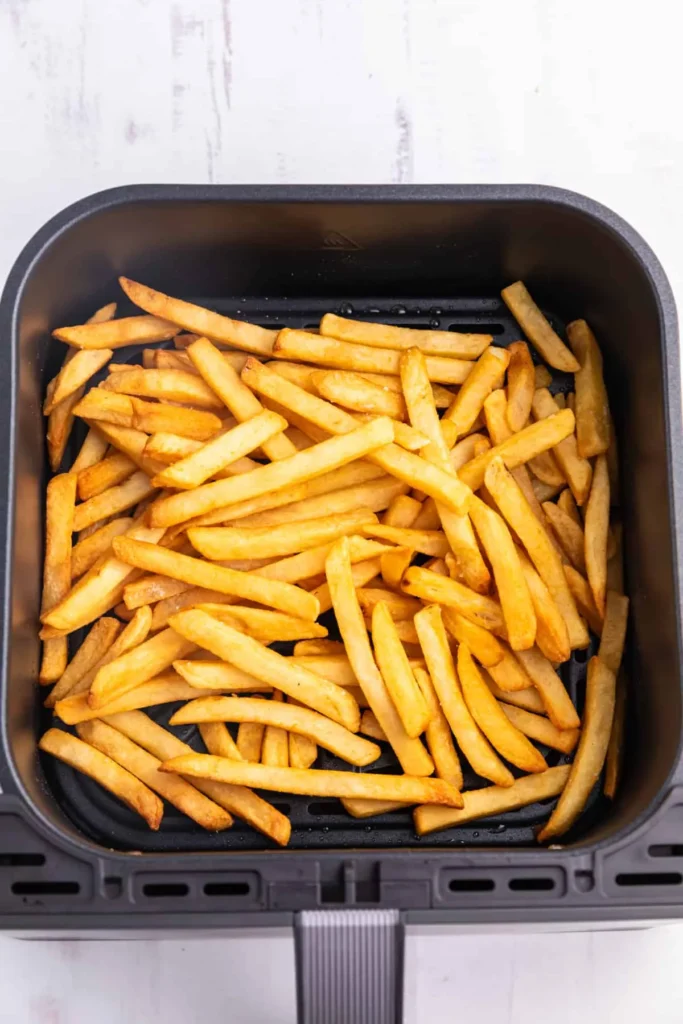
Either way, pairing the fish with some crunchy homemade fries cooked in the air fryer right before or after rounds out the plate without turning on the oven.
How to Air Fry Frozen Battered Fish Fillets
Frozen battered fillets are the no-fuss way to get dinner on the table. Here’s how to do it step by step.
First, preheat the air fryer to 400°F. Preheating is not optional here. A hot chamber ensures the batter begins crisping on contact rather than slowly defrosting and turning gummy.
Most air fryers need about 3 to 5 minutes to reach temperature.
While the air fryer heats up, take the frozen fillets straight from the freezer. Do not thaw them. Thawing makes the coating soggy and encourages it to peel away during cooking.
Arrange the fillets in the basket in a single layer with a little space between each one. Overcrowding traps steam and produces pale, soft spots on the batter. If you need to cook more than can fit, work in batches or plan to keep the first round warm in a low oven.
Place the basket in the preheated air fryer. Cook for 12 to 15 minutes total. At the halfway mark, around the 6- or 7-minute point, carefully flip each fillet.
A thin fish spatula works well to slide under the fillet without tearing the coating. Flipping isn’t mandatory for all brands, but it gives you an even golden color on both sides.
The only other tool you might reach for is a quick spritz of oil. Some brands are already oily enough that extra spray isn’t needed. If the fillets look dry or powdery out of the box, a light mist of avocado or canola oil from a pump sprayer helps the exterior brown more deeply.
Avoid aerosol sprays with propellants. They can degrade nonstick coatings over time.
When the timer goes off, check that the fish has reached an internal temperature of 145°F. Use an instant-read probe thermometer inserted into the thickest part of the fillet. The USDA safe minimum internal temperature for fish is 145°F, and that matters more than how brown the batter looks.
If the fillets are thicker than an inch, they might need an extra 2 to 3 minutes. Once they hit the safe temperature, pull them out and let them rest on a wire rack for a minute. That short rest lets the coating set and prevents steam from softening the bottom.
How to Air Fry Homemade Battered Fish Without the Mess
Homemade battered fish can turn out crisp in an air fryer, but wet batter needs a little more care than frozen, pre-battered fillets. The key is to dry the fish, use a thick batter, chill the coating, and cook it on perforated parchment so the batter sets before it can drip through the basket.
1. Dry and Season the Fish
Start with fresh or completely thawed cod, haddock, or pollock fillets. Pat each piece thoroughly dry with paper towels.
This step matters because excess moisture can prevent the batter from sticking properly. Season the fish lightly with salt before coating.
2. Make a Thick Batter
Prepare your beer batter or preferred wet batter, but keep it slightly thicker than you would for deep frying. It should cling generously to the fish rather than running off immediately.
If the batter looks too thin, stir 1 tablespoon of cornstarch into the flour mixture. This helps the coating set more quickly and can give it a lighter, crispier texture.
Let the mixed batter rest for about 5 minutes so the flour can hydrate evenly.
3. Give the Fish a Dry Base Coat
Before dipping the fish into the wet batter, coat each fillet lightly in plain flour or a flour-and-cornstarch mixture. Shake off the excess.
This dry layer gives the wet batter something to grip, which helps reduce peeling and bare spots during air frying.
4. Coat the Fish and Chill It
Dip each floured fillet into the batter, making sure it is evenly coated. Let the excess batter drip off for a second or two, then place the fish on a parchment-lined plate.
Now refrigerate the battered fillets for 10 to 15 minutes.
Don’t skip this step. Chilling firms up the coating and helps it hold onto the fish when it meets the strong airflow inside the air fryer.
While the fish chills, preheat the air fryer to 400°F.
5. Prepare the Air Fryer Basket
For homemade wet batter, use a perforated parchment liner. The holes allow hot air to circulate while catching small amounts of batter that loosen during cooking.
If you’re making your own liner, poke several holes through the parchment before using it.
Never place loose, solid parchment in an empty air fryer during preheating. It can lift into the heating element. Put the perforated liner in only when you’re ready to add the fish, following your air fryer’s instructions for parchment use.
6. Air Fry the Battered Fish
Take the chilled fish directly from the refrigerator and arrange the fillets on the perforated parchment in a single layer. Leave some space between them so hot air can circulate.
Lightly mist the tops with oil. You only need a thin coating; too much oil can make the batter greasy.
Cook at:
- 400°F for 5 minutes
- Reduce to 375°F
- Continue cooking for 5 to 7 minutes
Gently flip the fish once around the halfway point. Use a thin spatula and move carefully because the coating may still be delicate.
7. Check the Fish Before Serving
Don’t judge doneness by the color of the batter alone. Insert an instant-read thermometer into the thickest part of the fish and cook until it reaches 145°F internally.
The exterior should be crisp and golden, while the fish inside should be opaque and flake easily.
Once cooked, transfer the fillets to a wire rack and let them rest for about 1 minute. This allows excess steam to escape instead of softening the bottom crust.
The Simple Formula for Crispy Homemade Battered Fish
If you want to remember only the essentials, use this sequence:
Dry fish → flour coat → thick batter → chill 10–15 minutes → perforated parchment → 400°F for 5 minutes → 375°F for 5–7 minutes → check 145°F → rest 1 minute.
The total process takes roughly 35 minutes, but much of that time is passive chilling. The extra preparation is worth it because it gives homemade wet batter a much better chance of staying attached and crisping instead of dripping through the basket.
Setting Up Your Air Fryer: Basket, Parchment, and Oil Spray
Getting the setup right before a single fillet goes in is half the battle. The air fryer basket is designed with wide openings to let air circulate. That’s perfect for fries and wings.
It’s a trap for wet batter.
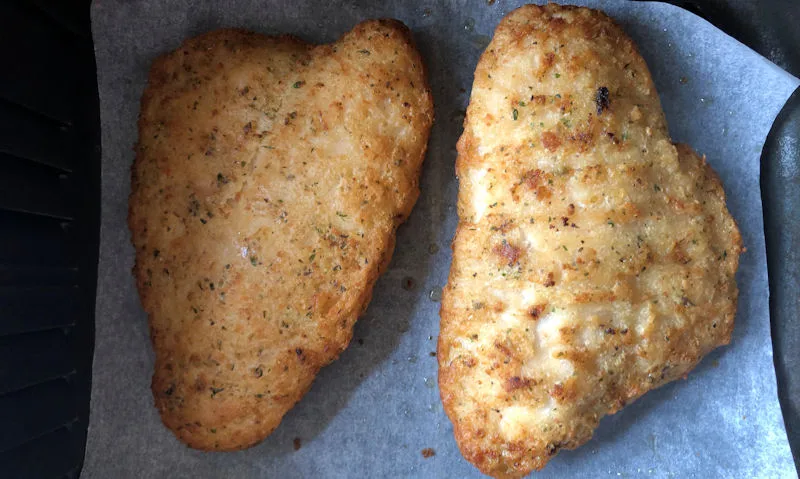
Start with a clean, dry basket. Any old oil residue will smoke at high heat and taint the flavor of your fish. If you’re cooking frozen battered fillets, you can often get away with placing them directly on the nonstick grate.
The coating is already set and won’t drip. A quick mist of oil on the basket itself can help with release, but it’s usually not needed on newer nonstick surfaces.
For homemade battered fish, a perforated parchment liner is non-negotiable. These liners come pre-cut with holes that match your basket’s airflow pattern. They catch the small amount of batter that loosens during cooking without blocking the convection current.
Don’t use solid parchment without poking holes. The air can’t circulate properly and you’ll end up steaming the fish instead of crisping it.
The oil spray matters more than you’d think. A pump-style mister filled with pure avocado, canola, or grapeseed oil gives you a fine, even coat. Propellant-based aerosol sprays like PAM can contain lecithin or alcohol that degrades nonstick coatings over time.
Lightly mist the top of the batter just before the basket goes in. You only need about a teaspoon total. Any more and you’ll have greasy, smoky results.
The Biggest Mistakes That Ruin Battered Fish in an Air Fryer
A few simple mistakes can leave your battered fish soggy, uneven, or undercooked. Avoid these and you’ll get much better results.
Overcrowding the basket: Keep the fillets in a single layer with some space between them. Too many pieces trap steam and soften the batter.
Skipping the preheat: Start with a hot air fryer so the batter sets quickly. Preheat for about 3–5 minutes before cooking.
Using thin batter: Your batter should cling to the fish instead of running off. If it’s too loose, add a little more flour or cornstarch.
Skipping the temperature check: Don’t rely on golden-brown batter alone. Check the thickest part of the fish and make sure it reaches 145°F.
Serving immediately: Let cooked fish rest on a wire rack for 60–90 seconds. This helps steam escape and keeps the bottom from turning soggy.
Avoid these common mistakes, and your battered fish will have a much better chance of coming out crisp, golden, and fully cooked.
Why Internal Temperature Matters More Than Looks
Crispy batter is the goal. But it’s not the safety standard. Fish cooks fast in an air fryer.
The hot, moving air penetrates quickly through the thin fillet. What looks done on the outside can still be translucent and cool in the center.
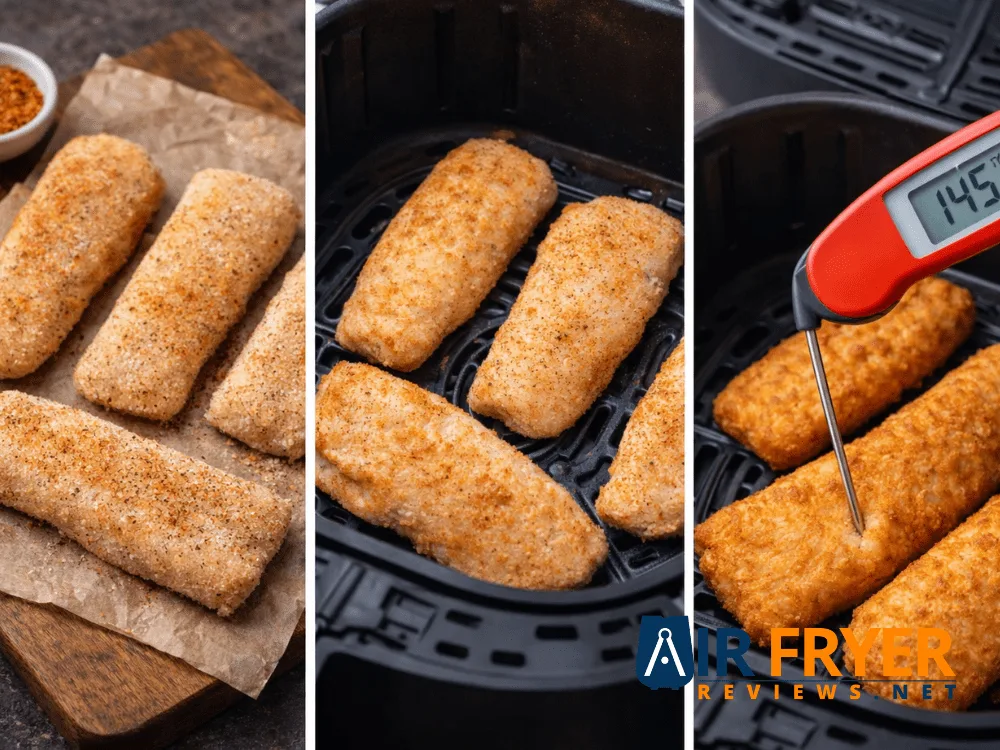
The USDA has one number that matters: 145°F. That’s the safe minimum internal temperature for fish. At 145°F, the flesh turns opaque and flakes easily with a fork.
Any lower and you risk foodborne illness. Much higher and the fish dries out, turning from tender to chalky in the space of 30 seconds.
Insert the probe into the thickest part of the fillet. Avoid touching the batter with the tip if you can. The coating runs hotter than the flesh inside.
A reading of 145°F means the fish is safe and perfectly cooked. Most frozen battered fillets will hit that mark at the 12-minute mark when cooked at 400°F. Homemade battered fillets typically need 10 to 12 minutes total, depending on thickness.
Thicker fillets like cod loin can take an extra 2 to 3 minutes. Thinner fillets like tilapia might be done at 8 minutes. The thermometer doesn’t care what the recipe says.
It tells you what’s actually happening inside the fish. That’s the only metric you can rely on every time.
Air Fryer vs Oven vs Deep Fryer for Battered Fish
Each cooking method has its place. Here’s how they stack up for battered fish.
| Factor | Air Fryer | Conventional Oven | Deep Fryer |
|---|---|---|---|
| Crispiness | Good to excellent | Moderate | Excellent |
| Oil used | 1 to 2 teaspoons | 1 to 2 teaspoons | 2 to 4 cups |
| Cook time | 12 to 15 minutes | 20 to 25 minutes | 4 to 6 minutes |
| Mess and cleanup | Low | Low | High |
| Oil disposal | None | None | Required |
| Batch size | Small | Large | Small to medium |
| Skill needed | Low | Very low | Moderate |
A deep fryer gives you the crispiest crust and the fastest cook. But you’re dealing with hot oil, disposal, and a lingering fried-food smell. A conventional oven handles large batches and requires zero technique.
The trade-off is a softer, less crunchy coating and a longer wait.
The air fryer sits right in the sweet spot for small households. You get a crunch that’s noticeably better than oven baking. You use almost no oil.
Cleanup is a quick wipe of the basket and tray. The main limitation is capacity. Most 4- to 6-quart baskets fit only two or three fillets at a time.
If you’re cooking for one or two people, the air fryer wins on speed, texture, and convenience. For a family of four or more, the oven might make more sense, or you can run the air fryer in two quick batches. The deep fryer is worth pulling out only when you want that authentic fish-and-chips-shop experience and don’t mind the cleanup.
Pros and Cons of Air Frying Battered Fish
Every method has trade-offs. Here’s the honest balance sheet.
Pros
- Far less oil than deep frying. You use about a teaspoon versus two or more cups.
- Crispier than oven baking. The concentrated airflow creates a noticeably better crust.
- Faster than a conventional oven. Most batches finish in 12 to 15 minutes from frozen.
- No oil to dispose of. No greasy pots to scrub.
- Consistent results with frozen battered fillets. Just arrange and cook.
- Keeps the kitchen cooler. No large oven heating up the house.
Cons
- Wet homemade batter needs extra steps. Chilling and parchment liners are required.
- Small batch capacity. Most baskets hold only 2 to 3 fillets.
- Overcrowding ruins the texture. You can’t rush a large meal.
- Batter can blow off if it’s too thin. Recipe adjustments matter more here than in a deep fryer.
- Some trial and error upfront. Your first attempt with homemade batter might not be perfect.
For most weeknight dinners, the pros easily outweigh the cons. The air fryer turns frozen battered fillets into a reliably crisp meal with almost no effort. Homemade batter takes a little practice, but once you lock in the chill-and-liner workflow, you’ll get results that beat the oven every time.
The only real downside is batch size. If you’re cooking for a crowd, plan for two rounds or fire up the conventional oven alongside.
Cleaning and Safety After Cooking Raw Fish and Wet Batter
Clean the air fryer soon after cooking. Raw fish can leave bacteria behind, while baked-on batter can smoke during your next use.
- Let it cool: Unplug the air fryer and let it cool before removing the basket and tray.
- Wash the basket and tray: Clean them with hot, soapy water, paying extra attention to the mesh holes where batter can stick.
- Clean the heating area: Wipe away any batter splashes around the heating element and drip tray with a damp cloth.
- Remove stubborn residue: Use a soft brush or a baking-soda paste instead of harsh scrubbing that could damage the surface.
- Prevent cross-contamination: Wash your hands, utensils, plates, and other surfaces that touched the raw fish with hot, soapy water.
A quick cleanup after each batch keeps the air fryer fresh, prevents smoke and burnt residue, and helps keep your next meal safe.
Quick Decision Guide: When It’s Worth Air Frying Battered Fish
Not every situation calls for the air fryer. Here’s a quick way to decide.
Use the air fryer when you’re cooking for one or two people. It’s faster than the oven and crispier, too. Reach for it when you have frozen battered fillets on hand.
Those are nearly foolproof. Pull it out when you want fried fish without dealing with a pot of hot oil.
Skip the air fryer if you’re feeding more than four people. The small basket means multiple batches. Use the oven instead.
Skip it if your batter is thin and watery and you don’t have time to chill or adjust it. A deep fryer or oven baking will handle a runny coating better. If you’re already comfortable with other proteins in the air fryer, fish is just another adaptation of the same principles.
For weeknight speed and ease, the air fryer wins. For large groups or ultra-thin batters, a different tool makes more sense.
Frequently Asked Questions
Can I put raw battered fish directly in the air fryer basket?
You can, but it’s risky. Wet batter drips through the grate and burns below. Place the battered fillet on a perforated parchment liner first.
Chill it for 10 to 15 minutes. The cold batter sets faster and holds its shape.
Do I need to flip battered fish in the air fryer?
For frozen fillets, flipping halfway through gives you even browning on both sides. For homemade battered fish, flip once gently around the 6-minute mark. Use a thin spatula and move slowly.
The coating is delicate until fully set.
Why did the batter fall off my fish in the air fryer?
Three likely culprits. The batter was too thin and slid off before it set. The fish went into a cold air fryer without preheating.
Or the fillet wasn’t dried properly before coating. Pat the fish completely dry and chill the battered fillet before cooking.
What temperature should I air fry battered fish?
Start at 400°F for frozen fillets. For homemade battered fish, hit it at 400°F for the first 5 minutes, then drop to 375°F for the remaining time. The high initial heat locks the batter in place.
Always verify the fish reaches 145°F inside.
How do I keep battered fish from sticking to the air fryer?
Use a perforated parchment liner. It catches the coating without blocking airflow. A very light spray of oil on the liner helps, too.
Don’t use solid parchment without holes. The air can’t move and the fish will steam.
Can I reheat leftover battered fish in the air fryer?
Yes, and the air fryer does it better than a microwave. Set it to 350°F and reheat for 3 to 4 minutes. The crust crisps back up instead of turning soggy.
Check that the internal temperature returns to 145°F before serving.