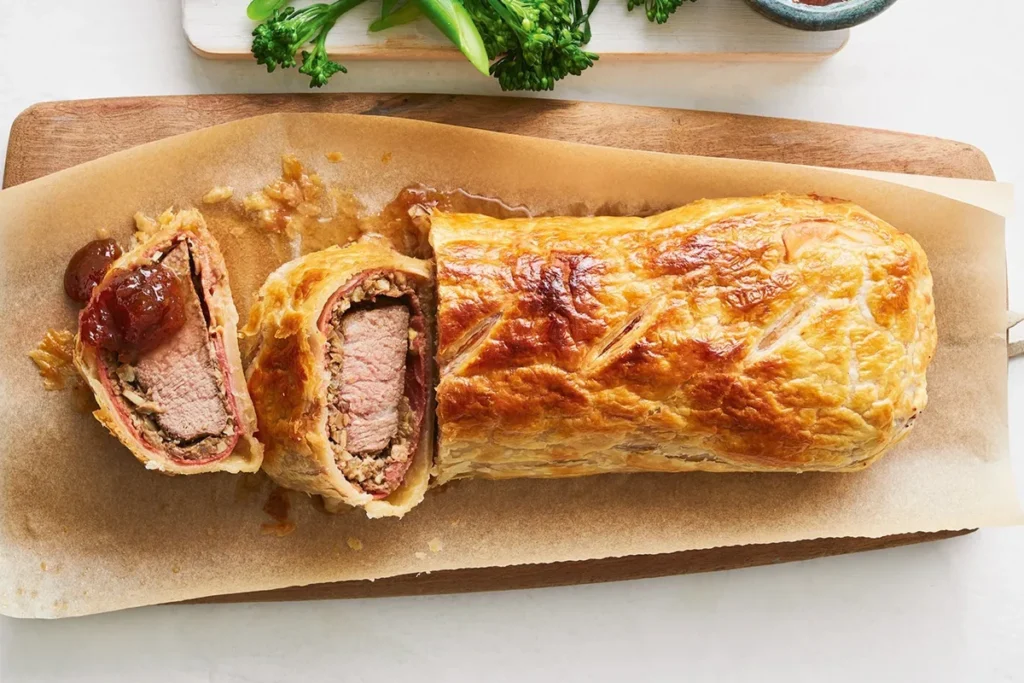
You can cook a beef Wellington in an air fryer, but it’s not a simple drop‑it‑in‑and‑walk‑away job. The whole thing hinges on your air fryer’s internal space. Get the fit wrong, and you’ll pull out a burnt, raw mess.
Get it right, and you’ll deliver a centrepiece that rivals a traditional oven bake in half the time.
Our research across manufacturer specs and user forums shows a whole 2‑pound Wellington needs at least an 8‑inch by 6‑inch cooking surface with a full inch of headroom above the pastry. Even then, many basket‑style models can’t manage it. Individual portions, however, work in almost any machine and finish in under 20 minutes.
That’s the air fryer’s rapid convection working in your favour, not against it.
Quick Answer
Yes, you can cook a beef Wellington in an air fryer. The size and style of your machine decide whether it works. A whole Wellington fits only in large oven‑style air fryers.
Individual portions work in almost any basket with enough height. Cook at 375°F. Pull the Wellington when the centre hits 130°F for medium‑rare.
The pastry browns fast, so watch it closely.
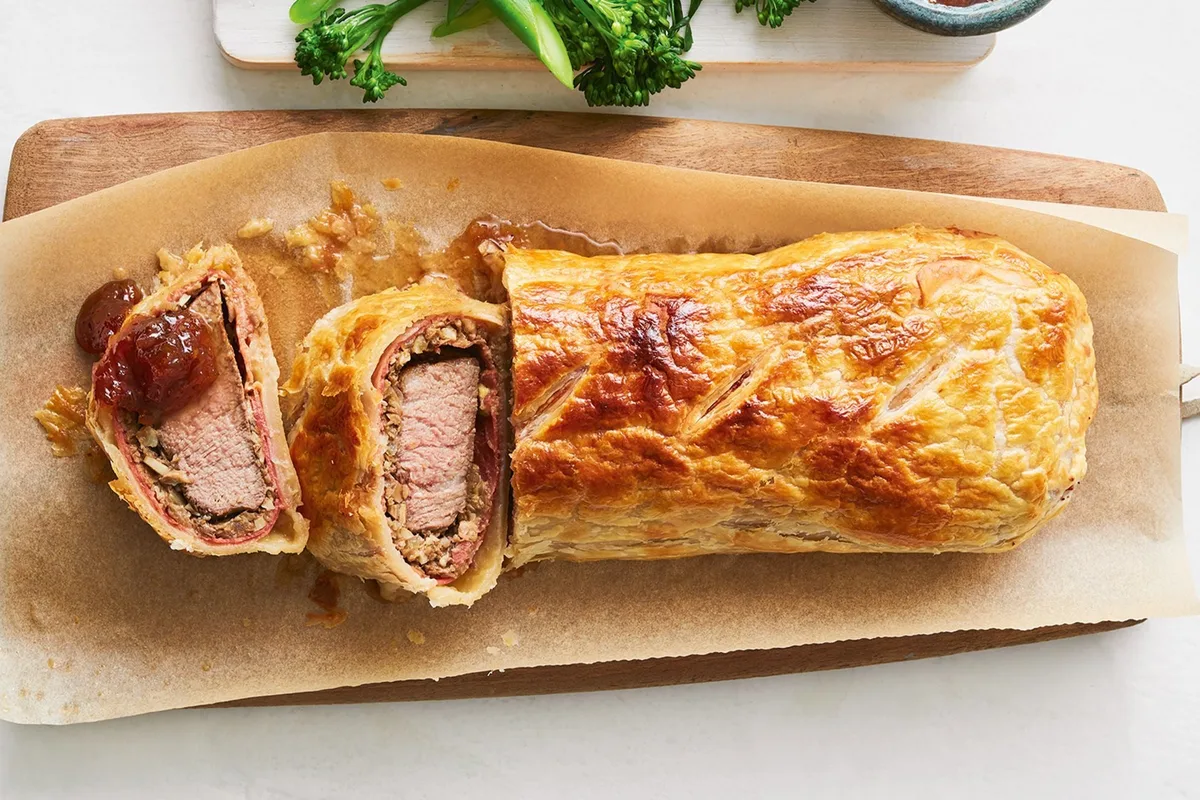
Image source: Bing (Web (fair-use with source credit))
Why This Recipe Pushes an Air Fryer to Its Limits
Beef Wellington is a precision dish. You’ve got a thick piece of beef tenderloin wrapped in duxelles, prosciutto, and delicate puff pastry. The pastry must turn golden and flaky while the beef inside stays perfectly pink.
In a conventional oven, you get gentle, even radiant heat. An air fryer is a tiny convection furnace. It blasts hot air right at the food from a heating element that sits only a few inches away.
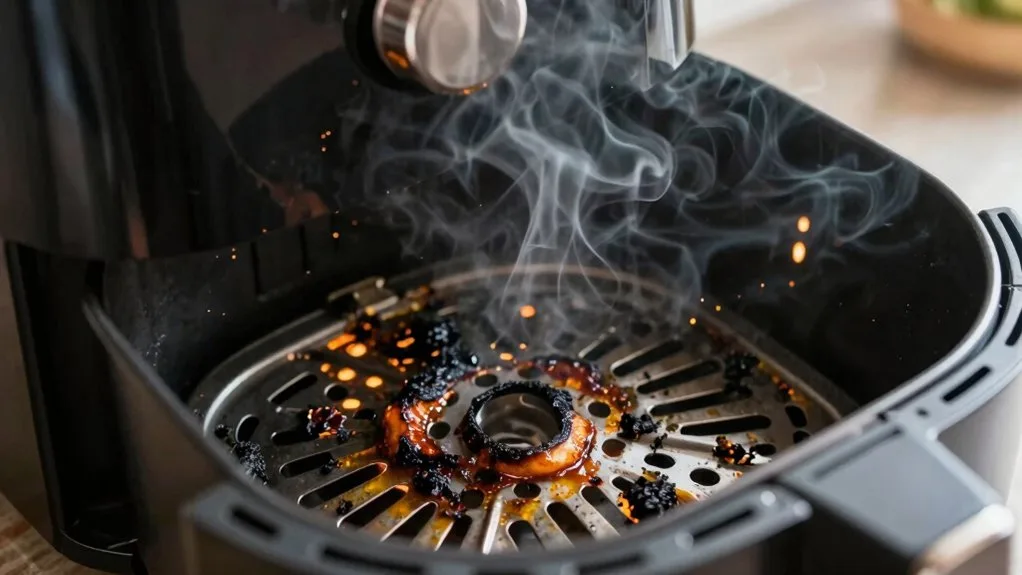
That’s where the trouble starts. The top of the pastry can burn before the centre of the beef even approaches rare. Fat from the prosciutto and beef renders out and drips onto the hot element, which can create smoke.
The basket floor traps moisture, so the bottom stays soggy unless you take extra precautions. And because every air fryer model heats differently, there’s no one‑size‑fits‑all timing chart that works for everyone.
But the upside is massive. When you dial in the right setup, the aggressive airflow creates a shatteringly crisp crust that’s hard to beat. The trick is treating the air fryer not as a shortcut oven, but as a tool with its own rules.
Once you understand those rules, you’ll stop fighting the machine and start using its strengths.
What Type of Air Fryer Do You Have? The First Big Fork in the Road
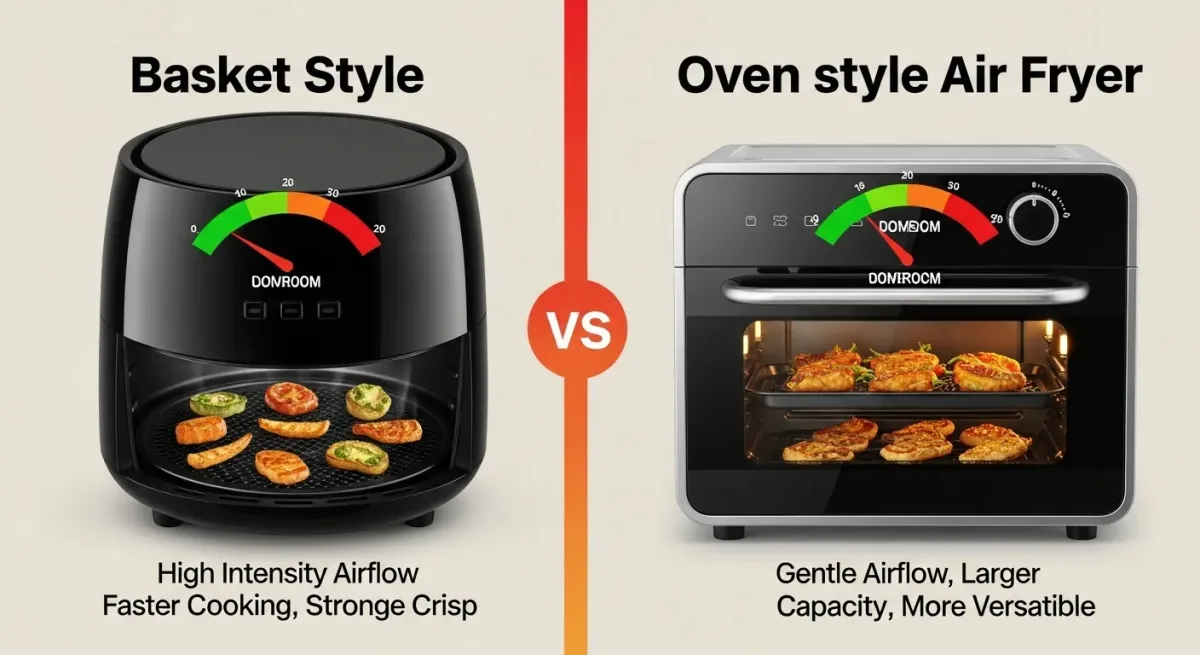
Image source: Web (Bing) / fryerbites.com (Web image (fair-use with source credit))
Before you even unwrap the puff pastry, stop and identify your machine. This single fact determines every decision that follows. Air fryers fall into two broad camps, and they handle a Wellington very differently.
Basket‑Style Air Fryer
This is the classic pull‑out drawer design. A heating element and fan sit directly above the food. The cooking chamber is compact and tall, which is great for crisping fries but limiting for a large roast.
Most basket models have a capacity between 3 and 6 quarts. The effective cooking area is rarely larger than 8 inches by 8 inches, and the overhead clearance is tight.
If this is what you own, a whole Wellington is probably off the table unless you’re cooking a very small centre‑cut tenderloin for two people. You’ll need to check clearance carefully. Even if the floor space works, the pastry can rise and touch the element, causing it to burn instantly.
That’s a fire risk and a ruined meal.
The good news is that basket air fryers excel at individual portions. The focused heat browns the pastry fast, and you can cook a couple of medallion‑sized Wellingtons perfectly without any cramming. We’ll talk about sizing those a bit later.
Oven‑Style Air Fryer / Air Fryer Oven
Oven‑style machines look like small toaster ovens with multiple rack positions. They often have top and bottom heating elements and a larger interior footprint. Some can hold a whole chicken.
For a beef Wellington, this is the safer bet. The extra width and height let you place the roast on a rack with room above it. The heat circulates more evenly, and you can usually slide a probe thermometer in without opening the door and losing all the hot air.
However, not all oven‑style air fryers are built equal. Some budget models still have tight vertical space on the lower rack. And because the fan runs hard in these units, the pastry can still darken quickly.
You’ll still need to monitor it. But the extra real estate opens up the possibility of a full‑size Wellington that feeds four to six people.
Where you place the machine matters too. If you’re tempted to tuck it under a cupboard, make sure there’s proper clearance for heat exhaust. An overheating unit can warp cabinets and ruin your cook.
Measuring Your Air Fryer: The Non‑Negotiable First Step
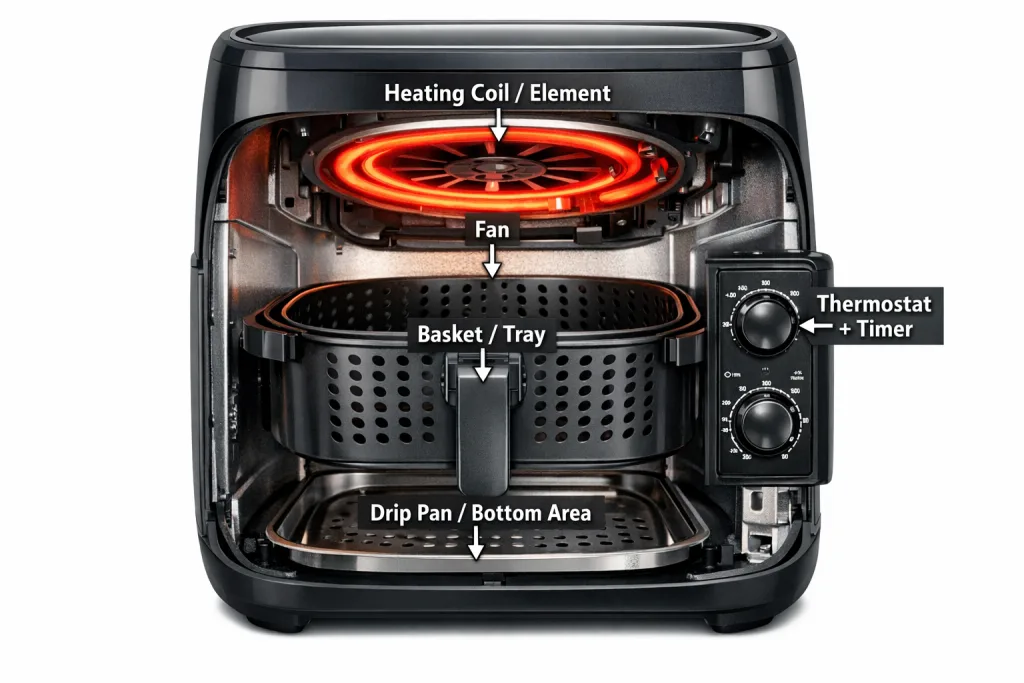
Image source: Bing (Web (fair-use with source credit))
Do not guess. A tape measure is the only thing standing between you and a raw, doughy disaster. Grab it and take three measurements inside your air fryer’s cooking zone.
Measure from the floor of the basket (or the rack if you’ll use one) to the heating element. Then measure the width and depth of the flat cooking area.
You need at least 1 inch of clear space above the tallest point of the wrapped Wellington. Puff pastry can expand a fair bit, so measure the assembled roast’s height before you commit. For a whole tenderloin, the wrapped bundle is typically 2.5 to 3 inches tall.
That means you need a minimum of 3.5 to 4 inches of clearance. Many basket air fryers only have 3.5 inches of usable height from the rack, leaving zero margin for error.
Floor space matters just as much. A 2‑pound centre‑cut tenderloin, after wrapping, is roughly 8 inches long and 5 inches wide. If your basket floor measures 8 inches by 6 inches, you can just about squeeze it in.
But the sides of the pastry shouldn’t touch the walls. Air must flow freely around the entire surface.
Here’s a quick reference for common air fryer sizes and how they handle a whole Wellington, based on manufacturer specs as of 2026.
| Air Fryer Capacity | Typical Interior Dimensions (L×W×H) | Whole 2‑lb Wellington? |
|---|---|---|
| 3 – 4 qt basket | 7.5 × 7.5 × 3.5 in | No (too low) |
| 5 – 6 qt basket | 8.3 × 8.3 × 4 in | Only if tenderloin is very short and thin |
| 8 – 10 qt oven‑style | 12 × 10 × 5 in (lower rack) | Yes, with room to spare |
| 10+ qt oven‑style | 13 × 11 × 6 in | Comfortably fits a larger chateaubriand |
If your numbers fall short, don’t force it. That’s the moment to pivot to individual portions instead. And if you’re considering a liner to catch drips, pause and check our liner safety guidelines first.
Some liners can block airflow or flutter up into the element.
For more general tips on getting the most out of your machine, our collection of air fryer tips covers everything from preheating to rack placement.
Whole Wellington or Individual Portions? Your Best Path to Success
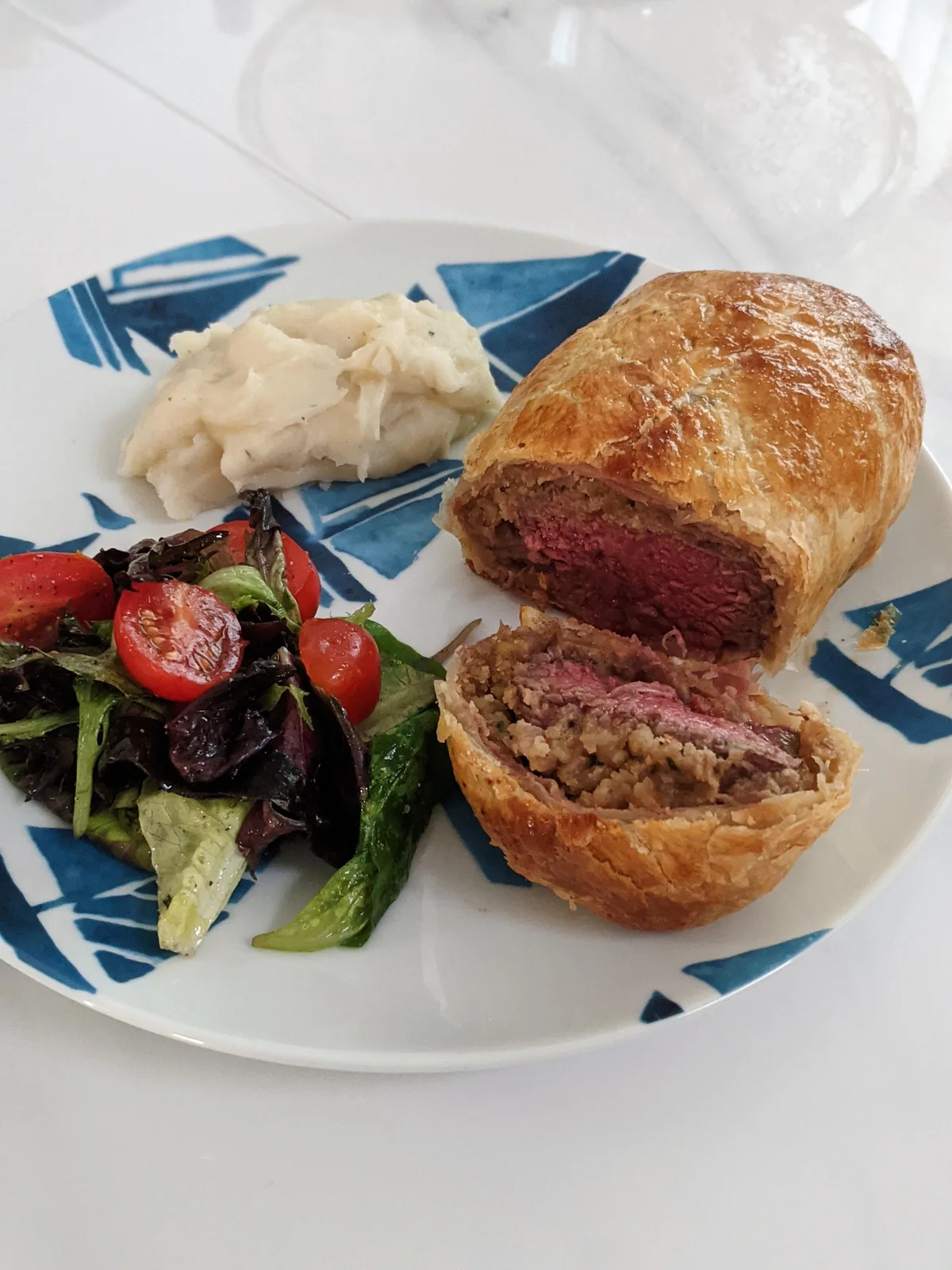
Image source: Web (Bing) / reddit.com (Web image (fair-use with source credit))
Once you’ve measured, the next big decision lands. Do you go for the showstopping whole roast, or do you break it down into neat individual servings? This isn’t just about looks.
It’s about cook time, risk, and how forgiving the process is.
A whole Wellington is undeniably impressive. Slicing into that golden pastry shell at the table is a moment people remember. But the margin for error is razor thin.
You have one shot to get the beef and the pastry in sync. If the centre reads 115°F while the outside is already dark brown, you can’t reverse it. The long cook gives the moisture inside the duxelles more time to steam the bottom layer of pastry.
And if you misjudged the air fryer’s hot spots, you’ll see the result in uneven browning.
Individual portions flip that script. You cut the tenderloin into 2‑inch thick medallions, wrap each one separately, and arrange them in a single layer in the basket. They cook in 15 to 22 minutes.
You can pull one out and check doneness without sacrificing the entire meal. The smaller size means the pastry reach its crisp peak right as the beef hits medium‑rare. There’s less trapped steam, so the bottom stays crisper.
And because each piece is self‑contained, you can fit them into almost any air fryer.
| Factor | Whole Wellington | Individual Portions |
|---|---|---|
| Air fryer fit | Needs large oven‑style | Fits most basket and oven models |
| Cook time | 30 – 45 minutes | 15 – 22 minutes |
| Pastry crispness | Risk of soggy bottom | Evenly crisp all around |
| Doneness control | One chance, hard to fix | Pull pieces as they finish |
| Presentation | Spectacular centrepiece | Elegant plated servings |
| Difficulty | High | Moderate |
If your air fryer is on the smaller side, the choice is already made for you. If you’ve got the space for a whole roast, it’s still worth asking yourself how much stress you want on the day. A tray of individual portions, finished with a flaky golden top and a pink centre, looks every bit as good on a warm plate.
For more recipe inspiration that works in compact spaces, browse our air fryer recipe collection.
Either route you pick, the next section walks through the crucial adaptations that make the difference between a sad, pale pastry blob and a Wellington you’ll want to make again.
How to Adapt a Beef Wellington for the Air Fryer (Without Ruining It)
You can’t just slide a classic oven‑recipe Wellington into an air fryer and hope for the best. The faster, more direct heat demands a few deliberate tweaks. Do these, and the dish plays to the air fryer’s strengths.
First, sear the tenderloin hard before wrapping. A quick blast in a hot skillet gives the beef a deep brown crust. That locks in flavour and shortens the time it spends in the air fryer, reducing the window where the pastry can over‑brown.
Let the seared meat cool completely before assembling. Warm beef will start to melt the butter in the puff pastry before cooking even begins.
Next, get the duxelles seriously dry. Mushrooms release a ton of water. Sauté them with shallots until every drop of moisture is gone and the mixture looks almost crumbly.
A wet duxelles is the number one cause of a gummy, undercooked bottom. Some chefs add a thin crêpe between the prosciutto and the duxelles as a moisture barrier, which is smart insurance in a high‑humidity air fryer environment.
Chill the fully wrapped Wellington for at least 30 minutes before it goes into the air fryer. You want the pastry firm and cold. That buys you extra time for the beef to cook through before the crust gets too dark.
Brush the surface with egg wash just before loading it in.
Set your air fryer to 375°F. Preheat it properly. Place the Wellington on a rack or a trivet inside the basket so hot air can circulate underneath.
If your model tends to run hot, start at 370°F and adjust. Insert a probe thermometer into the thickest part of the beef before you close the drawer. Watch the internal temperature, not the clock.
Pull the Wellington when the centre reaches 130°F for medium‑rare. Carryover heat will push it a few degrees higher while it rests. For food safety, the USDA recommends whole beef cuts hit 145°F with a 3‑minute rest, but many home cooks prefer the texture at a lower finishing temperature.
You can check the agency’s full safe temperature chart for your own comfort level.
If the pastry browns too fast, tent a small piece of aluminium foil over the top. Don’t let the foil touch the heating element. Some basket models can’t accommodate this safely, so in that case, you’ll rely purely on the chilling step and a slightly lower temperature.
Finally, rest the Wellington for a full 10 minutes on a cutting board. Tight, short‑blast cooking drives the juices to the centre; resting redistributes them. Slice with a serrated bread knife so you don’t crush the pastry.
Before you set the temperature, make sure your air fryer has the venting requirements it needs. A machine jammed against a backsplash struggles to regulate its heat. Give it room to breathe, and your Wellington will thank you.
The Step-by-Step Air Fryer Beef Wellington Workflow
Pre-Sear the Tenderloin (Why It’s Worth It)
Season the beef aggressively with salt and pepper. Get a skillet screaming hot with a splash of high-smoke-point oil. Sear every side for 60 to 90 seconds until a deep brown crust forms.
You’re not cooking the interior. You’re building flavour and creating a dry surface for the prosciutto to grip. Let the meat cool completely on a rack.
If it’s even slightly warm, the pastry butter will melt before you get the thing in the air fryer. That’s a soggy, greasy finish you can’t recover from.
Duxelles & Moisture Control for a Crisp Crust
Finely chop mushrooms and shallots. Sauté them in a dry pan first to release water. Then add a little butter and cook until the mixture looks almost like a paste.
Every drop of visible moisture must evaporate. Spread the duxelles on a plate and chill it. Some cooks lay a thin crêpe or a sheet of filo between the prosciutto and the mushroom layer.
In an air fryer that extra barrier prevents steam from softening the pastry base. If you skip it, at least make sure the duxelles is bone dry.
Chill, Egg Wash, and Load the Air Fryer
Wrap the cooled beef in prosciutto, then spread on the duxelles. Roll it all tightly in puff pastry and seal the edges. Wrap the whole thing in cling film and refrigerate for a minimum of 30 minutes.
Cold pastry buys you time in the blast of hot air. Brush with egg wash just before cooking. Set the Wellington on a rack inside the basket.
You want air moving underneath.
Temperature, Timing, and the Only Thermometer You Can Trust
Set the air fryer to 375°F. Insert a probe thermometer into the centre of the beef. Cook until the internal temperature reads 130°F for medium-rare.
That usually takes 30 to 45 minutes for a whole roast. Individual portions finish in 15 to 22 minutes. If the top browns too fast, tent it with foil.
Pull the Wellington out the moment it hits the target. Rest it for 10 full minutes. A knife slipped in too early will bleed juice all over your board.
The Most Common Air Fryer Wellington Disasters (and How to Avoid Them)
Even careful cooks hit these snags. Here are the big ones and their fixes.
- Burnt pastry, raw centre. The air fryer runs too hot or the roast is too cold inside. Fix: lower the temperature to 370°F and always sear the beef first.
- Soggy bottom. The duxelles is wet or the Wellington sat directly on a flat surface. Use a rack. Dry the mushrooms completely.
- Smoke filling the kitchen. Rendered fat drips onto the heating element. Place a small drip tray beneath the rack. Clean your air fryer before starting.
- Pastry stuck to the basket. Skip the oil spray directly on the pastry. Use a sheet of perforated parchment or a silicone mat on the rack.
- Uneven browning. Hot spots exist in every model. Rotate the Wellington 90 degrees halfway through the cook.
- Pastry blows out and splits. The seam wasn’t sealed tightly enough. Pinch and crimp aggressively. Chill before cooking.
Air Fryer Safety Musts When Roasting Pastry-Wrapped Meat
Hot fat and exposed heating elements don’t mix well. Never let unweighted parchment paper float around inside the basket. It can fly up and touch the element, starting a small fire.
Always tuck the corners under the food or use a rack mat that stays put.
Keep a close eye during the first five minutes. If you see wisps of smoke, pause the machine and check for fat pooling. Pour off any excess carefully.
A clean air fryer is safer. Built-up grease from previous cooks is a smoke and fire risk.
Position the air fryer with at least 6 inches of clearance on all sides. If you’re roasting for a holiday meal, don’t shove it under the cupboards to clear counter space. For more on safe placement, head to our guide on ventilation and cupboard clearance.
Follow the USDA’s recommended internal temperature if you’re serving guests who need that assurance. A whole beef cut hits the safe zone at 145°F with a 3-minute rest. The UK Food Standards Agency offers similar guidance on cooking beef at home if you want to cross-check the numbers.
You can read their cooking safety advice here.
Pro Tips to Get a Crisp Crust and a Perfect Pink Center Every Time
- Double-wrap the prosciutto layer. Two thin layers are better than one. They block more moisture from reaching the pastry.
- Brush with egg yolk, not whole egg. Yolk gives a richer, darker gloss that doesn’t burn as fast.
- Start from cold. Pull the Wellington from the fridge only when the air fryer is fully preheated.
- Use fine salt in the duxelles. Coarse salt doesn’t dissolve evenly. It leaves pockets of saltiness and excess liquid.
- Slide a thin metal skewer into the centre at the 20-minute mark for a whole roast. Touch it to your inner wrist. Cold means raw. Warm means it’s getting there. Hot means you’re close. The thermometer is still your final answer.
- Rest on a wire rack, not a plate. Steam released from the bottom won’t turn the pastry gummy.
- Browse our full collection of air fryer recipes for more proven techniques. The same prep tricks apply to all sorts of pastry-wrapped mains.
Freezer-to-Air-Fryer: Can You Cook a Frozen Beef Wellington?
Yes, you can cook a frozen beef Wellington in an air fryer if it was prepared and assembled from fresh ingredients before freezing. Don’t try this with a store-bought frozen Wellington that was never intended for an air fryer. Those products vary wildly in filling density and pastry type.
Place the fully frozen Wellington on the rack. Do not thaw it first. Set the air fryer to 325°F.
Cook for 45 to 55 minutes for a whole 2-pound roast. Check the internal temperature with a probe after 40 minutes. You want 130°F in the centre.
The lower temperature gives the frozen core time to warm through before the pastry burns. If the crust looks too pale near the end, bump it up to 375°F for the final 5 minutes.
Understand that a frozen Wellington will never have quite the same flaky lift as a fresh one. Ice crystals slightly dampen the pastry’s layers. But it is a perfectly good make-ahead option for a dinner party.
Wrap it in a double layer of cling film and a layer of foil before freezing. Label it with the date. Use within one month for the best texture.
After cooking, rest it for 15 minutes instead of 10. The extra carryover time helps the core temperature settle.
Your Quick-Reference Decision Guide: Oven vs. Air Fryer for This Dish
Choose the oven when you need a guaranteed result for a crowd. It offers steady, forgiving heat and works for any size Wellington. Pick the air fryer when you want speed, an extra-crisp pastry, or are cooking for two.
Individual portions tilt the decision toward the air fryer every time. For whole roasts, the oven wins on reliability.
| Factor | Air Fryer | Conventional Oven |
|---|---|---|
| Speed | Fast (15‑45 min) | Slower (40‑60 min) |
| Pastry finish | Extra crispy top | Even all‑round browning |
| Soggy bottom risk | Higher without prep | Lower |
| Capacity | Small to medium | Fits any size |
| Energy use | Lower | Higher |
Frequently Asked Questions
Can I cook a beef Wellington in a small air fryer?
Yes, if you make individual portions. A whole roast won’t fit in baskets under 5.8 quarts. Measure the clearance before committing.
What temperature is best for air fryer beef Wellington?
375°F works for most models. Drop to 370°F if your unit runs hot. Always rely on a probe thermometer, not the timer.
How do I stop the pastry burning before the beef cooks?
Chill the wrapped Wellington thoroughly. Sear the beef first. Tent with foil if the top darkens too fast.
A lower initial temperature also helps.
Can I use store-bought frozen beef Wellington in an air fryer?
Not recommended. Pre-made frozen versions often use dense pastry and unknown fillings that don’t cook evenly. Stick with homemade if you can.
How long should I rest the Wellington after air frying?
Ten minutes for a fresh cook. Fifteen minutes for a frozen one. Rest on a wire rack to keep the bottom crisp.