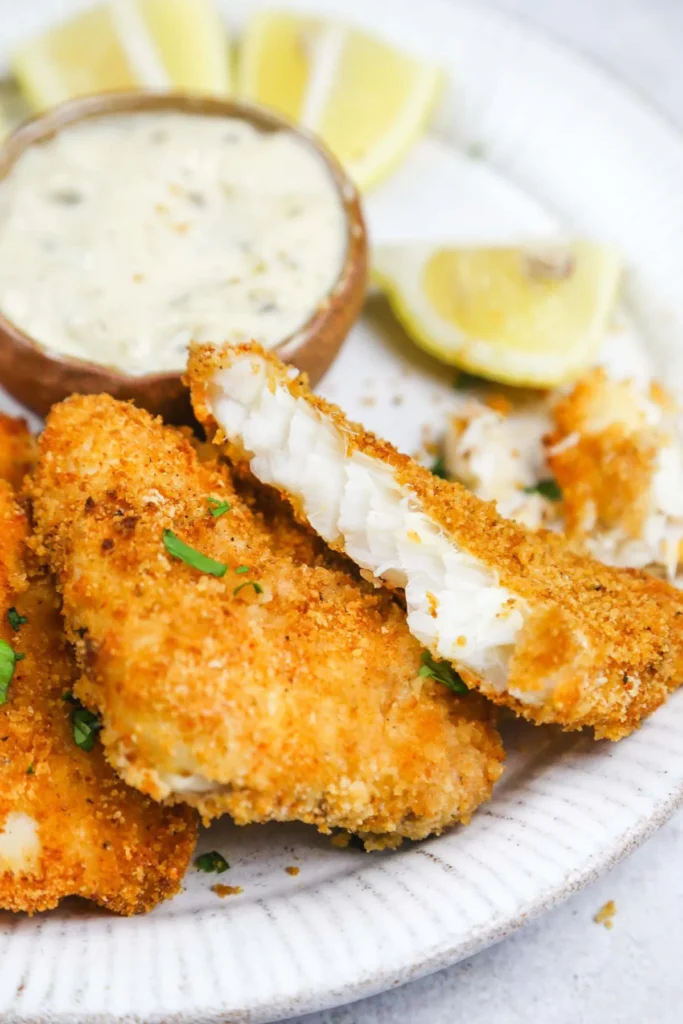
If you’ve ever pulled a tray of frozen battered fish out of the air fryer only to find limp, steamy batter instead of a crisp golden shell, you already know the timer on the packet isn’t the full story. Cooking that boxed fish straight from the freezer is genuinely simple, but the step most people skip is learning which visual signals matter more than the countdown.
The USDA sets the safe internal temperature for fish at 145°F (63°C). Yet even when you hit that number precisely, the gap between a pub-style crunch and a flabby letdown is decided by what you watch, not just what you wait for. That’s where real air fryer skill lives.
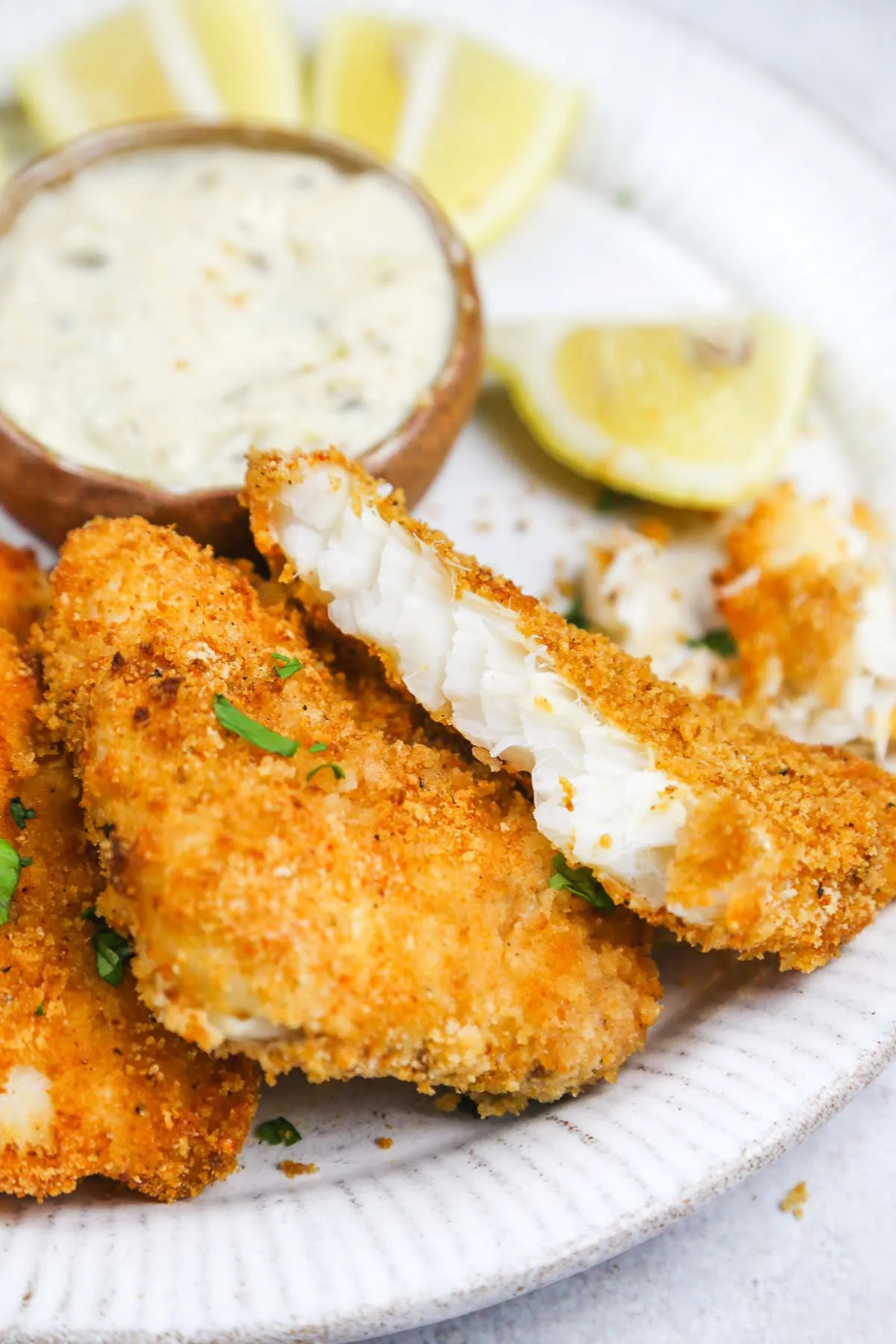
Quick Answer
Preheat your air fryer to 200°C (400°F). Arrange frozen battered fish in a single layer. Leave space around each fillet.
Cook for 10 to 12 minutes. Flip once at the halfway mark. The fish is done when the batter is deep golden-brown, sizzling subsides, and the flesh flakes easily with a fork.
The Soggy Fish Problem (And Why Air Fryer Times Alone Won’t Save You)
In our research and across countless air fryer owner forums, the number one complaint about frozen battered fish is soggy bottoms. The batter puffs up, looks promising, then collapses into a damp, chewy shell the moment you lift it off the basket.
That happens because the coating starts out par-fried, so it’s already carrying a bit of oil. When you blast it with hot air, the surface needs to release steam quickly. If that moisture can’t escape, if the fish is crowded or the basket is overloaded, the trapped vapour turns the crisp potential into a steamy disappointment.
It’s not that your air fryer is weak. It’s that airflow, spacing, and timing matter more than the “12 to 14 minutes” printed on a cardboard box that was written for a full-size oven.
Getting the crunch you want means unlearning the “set it and forget it” oven mindset. You can glance at a digital timer all day, but the batter won’t care. What it responds to is how you prep the basket, how many fillets you cram in, and whether you lift it at exactly the right moment.
That’s why the most reliable cooks go by eye and ear instead of trusting a one-size-fits-all cook time.
And if you’ve been using liners or parchment under your fish, that can quietly sabotage the airflow, too. We’ve covered how those materials interact with an air fryer’s heating pattern before. A solid liner that blocks the bottom vents effectively turns your crisp airflow into a gentle bake, which is exactly what you don’t want here.
Why Your Eyes Are the Best Kitchen Tool for Frozen Battered Fish
Every air fryer model cooks a little differently. As of 2026, the most common home machines run between 1200 and 1800 watts, with basket sizes ranging from compact 2-litre units up to generous 8-litre family models. That’s a huge spread, which makes any universal cook time almost meaningless.
A high-wattage, compact air fryer can toast batter in nine minutes flat while a larger, lower-wattage oven-style machine takes fourteen. If you only trust a preset, you’ll either burn the coating or serve cold fish.
So what should you watch? Start with the colour of the batter. Frozen battered fish goes from pale, chalky white to a deep amber as the oil in the coating re-activates and toasts.
That colour shift isn’t subtle. Next, look at the surface texture. A properly crisping layer will develop tiny bubbles and look dry and pebbly, not glossy or wet.
And listen. In the final few minutes, the aggressive sizzle that signals moisture meeting hot air will begin to quiet down. That’s your cue to check.
All of this visual feedback gives you a better read on readiness than any number on a timer display. It also helps you adapt to the thickness of the fillet, the brand of fish, and even the voltage of your kitchen socket. Trusting your eyes means you never have to pull out a sad, undercooked centre again.
Step-by-Step Visual Cues: From Freezer to Golden & Crisp
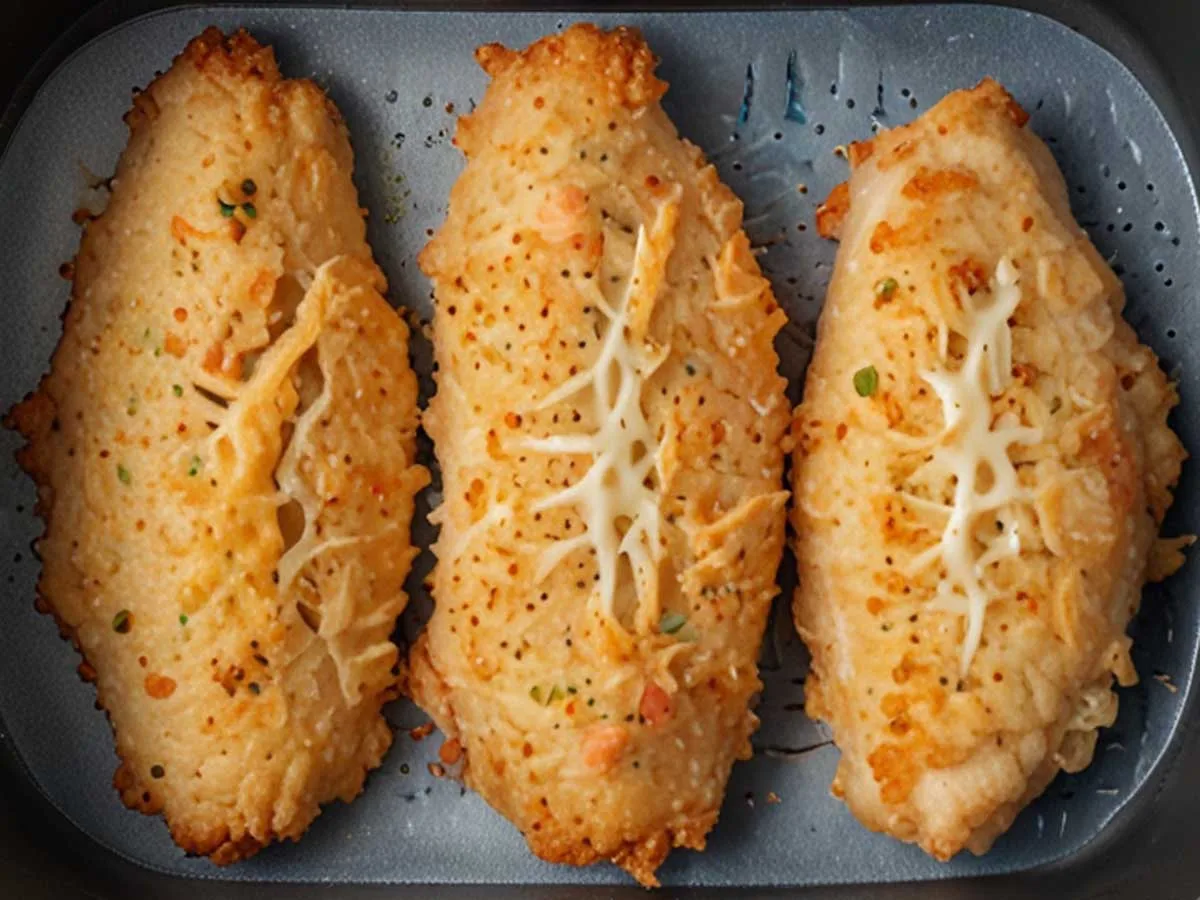
No thawing. No pre-seasoning. Just a clear understanding of what the fish should look like at each stage.
Follow these visual checkpoints and you’ll nail it every time.
Before You Start: Preheating and Basket Prep
Set your air fryer to 200°C (400°F) and let it run empty for 3 to 5 minutes. A properly hot basket sears the bottom of the batter immediately, stopping the coating from gluing itself to the metal. You’ll know it’s ready when you can feel a sharp wave of heat if you cautiously hold your hand a few inches above the crisper plate.
Lightly mist the basket grates with a neutral oil spray. You don’t need to soak it, just a thin sheen that catches the light. This step isn’t about adding fat.
It’s about creating a friction-free surface that lets the batter release cleanly later. Skip the spray and you’ll often tear the coating when flipping.
Laying Out the Fish: Spacing and Surface Tells
Take the fillets straight from the freezer. Arrange them in the basket so no two pieces touch. A gap of about a centimetre between each one is the bare minimum.
If you’re cooking battered fish fingers, leave similar breathing room. The raw frozen batter should look uniformly pale with a dry, floury surface. If you see any ice crystals or frost patches, flick them off with your finger.
Excess ice melts into steam and softens the adjacent batter before it ever gets a chance to crisp.
Mid-Cook Flip: What the Underside Should Look Like
At the 6-minute mark, slide the basket out and take a look. The top-side coating should already be shifting from white to a light amber and starting to bubble. Use a thin, flexible spatula to lift each fillet carefully.
The underside will still be pale, but it should be dry to the touch, not wet. If you see damp, translucent patches pooling around the fillet, you either skipped preheating or overcrowded the basket. Give those areas a quick blot with a paper towel and return the fish to cook for another 4 minutes before checking again.
After flipping, the freshly exposed batter will look pale again. That’s normal. Close the basket and let the air fryer work.
The Final Doneness Check: Colour, Sound, and the Fork Test
Around the 10-minute mark, you’ll notice the sizzle softening. Open the basket and inspect the colour. Look for a consistent deep golden-brown across the entire fillet, edges included.
Any pale yellow patches need more time. If the batter looks dark mahogany, you’ve overshot slightly and the flavour might have a bitter edge.
Pick the thickest fillet in the batch. Insert a fork just behind the centre and twist gently. The flesh should part into large, pearlescent flakes with no resistance.
If you see any translucent, jelly-like meat, close the basket and cook in 2-minute bursts until it flakes cleanly. An instant-read thermometer poked into the middle of the fish confirms you’ve passed 63°C, but that flake test is the kitchen cue that’s easier to act on. Once the fish flakes, pull everything out immediately and let it rest on a wire rack or a plate lined with kitchen paper for a minute or two.
That rest sets the crust and stops the steam that rises off the hot fish from softening the underside.
Key Visual Identifiers of Perfectly Cooked Battered Fish
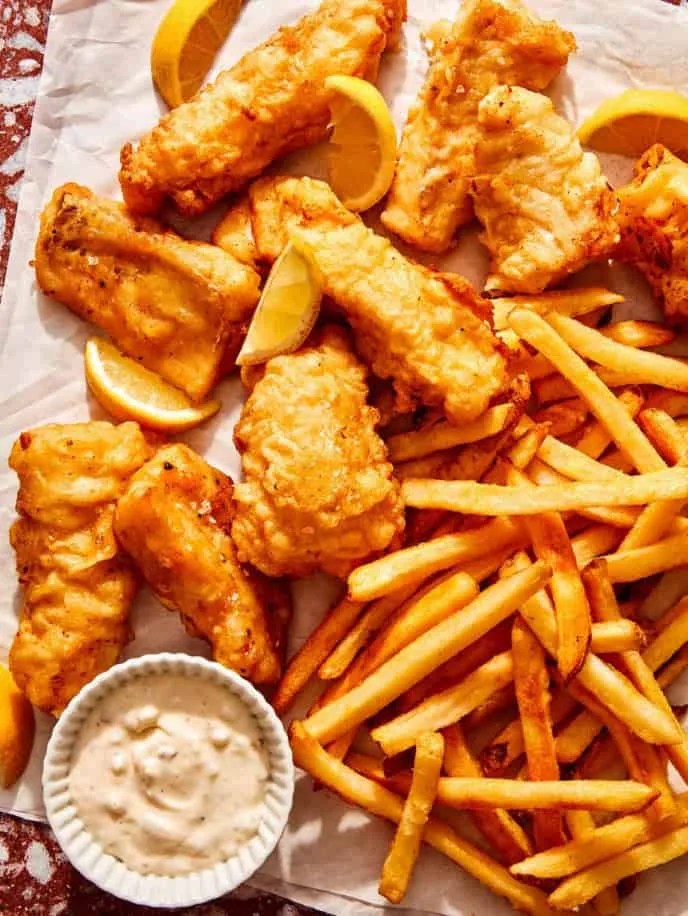
Knowing the difference between “done” and “almost done” comes down to a few very specific tells that anyone can learn in one cook.
Golden-Brown = Crispy, Not Burnt
Aim for the colour of a well-baked croissant, deep amber with a hint of reddish bronze. If the batter stays light blonde, the texture will be soft and bready. If it veers into dark espresso territory, the starches have started to burn and the taste turns acrid.
The sweet spot is a shade that looks almost too dark for bread but is exactly right for this type of par-fried batter.
Surface Bubbles and Active Sizzle
As the oil in the coating reheats, it pushes moisture out and creates tiny blisters. That bubbled, pebbly surface is a reliable sign the batter is expanding and crisping, not just drying out. A batter that looks smooth and glossy at the end of the cook is still holding trapped steam.
You want to hear a rapid, crackling hiss when you slide the basket open. When that noise tapers to a gentle whisper, it’s time to pull the fish.
The Flake Check: How the Flesh Should Part
Per USDA guidelines, fish must reach an internal temperature of 145°F (63°C) to be safe. The visual confirmation is just as trustworthy. Gently press the side of a fillet with a fork.
The flesh should separate into thick, moist sheets that glisten slightly but never look wet or raw. If the flakes hold together in a solid block, the fish needs more time. If it crumbles into dry shreds, it’s overdone.
The perfect texture is soft, juicy, and releases with almost no pressure.
The Tail Test: Preventing Overcooked Thin Ends
Many frozen fillets taper at one end. That thin tail cooks far faster than the thick centre. When you do your flake check, always probe the meat just behind the thickest part.
If the tail part looks deeply browned and feels firm, that’s fine, so long as the centre isn’t still raw. To minimise the problem next time, position the tails so they point toward the cooler front of the basket, away from the heating element. A small tweak that saves texture.
Common Visual Mistakes (And How to Fix Them Mid-Cook)
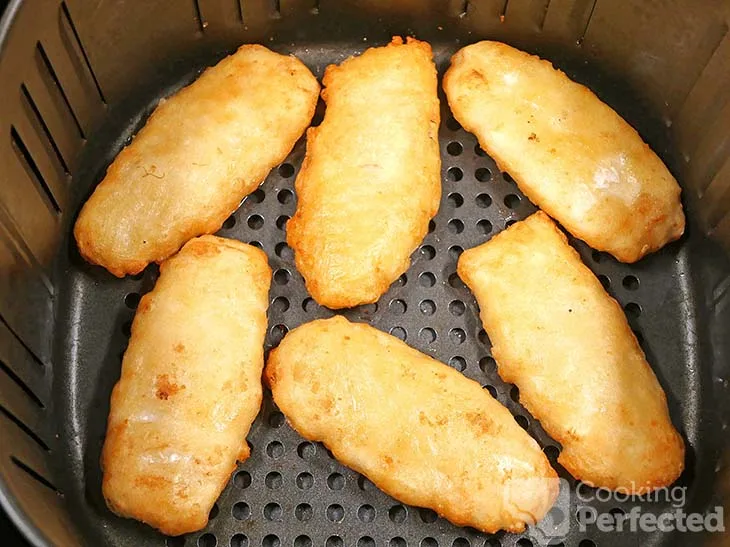
Even careful cooks make these missteps, but spotting them early can salvage your dinner.
Overcrowding: Steamed Batter That Never Crisps
The most obvious error. When fillets touch, the batter between them stays pale and gummy even after the timer beeps. The steam from one piece softens its neighbour.
If you notice pale, deflated patches mid-cook, pause and rearrange. Separate the fillets with a couple of centimetres of clear basket between them. If that’s not possible, cook in two batches.
Your air fryer’s capacity for crispy fish is usually half the number that technically fit.
Uneven Browning from Hot Spots in the Air Fryer
Many air fryers don’t heat perfectly evenly. You might see one side of a fillet darkening while the other stays anemic. Rotate the basket 180 degrees halfway through cooking.
If your model has a top-heating element that runs especially hot, swap the fillet positions so every piece gets time under the most intense part of the airflow.
Burnt Loose Batter Bits on the Element
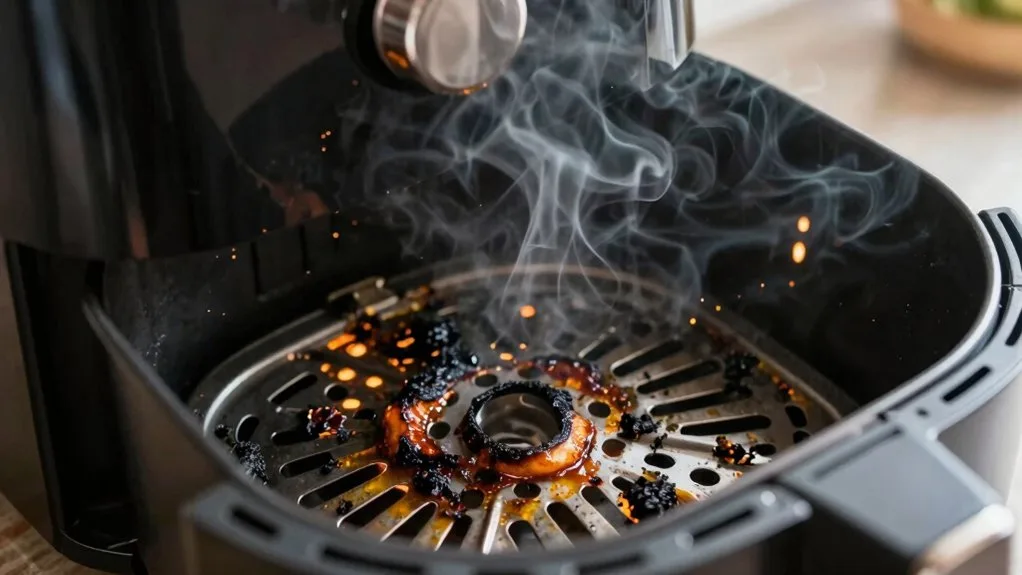
Tiny fragments of batter inevitably flake off early in the cook and blow onto the heating coil above the basket. They smoulder and produce a thin, acrid smoke. If you smell burning without any visible char on the fish itself, pause cooking.
Let the basket cool just enough to safely handle, then use a dry paper towel to flick away the burnt crumbs from the crisper plate before continuing. After the meal, clean the heating element according to your machine’s manual to stop that smoke from tainting the next cook.
Dark Outside, Cold Inside: The Frozen-Centre Trap
This one tricks people into turning off the machine too soon. The outside hits a beautiful mahogany in under ten minutes, but the centre still feels solid and icy. The fix is lowering the temperature immediately by 10°C and cooking longer.
If your machine has a lower rack position or a “gentle” setting, drop the basket further from the element and add 3 to 4 extra minutes. Check the internal flake before trusting colour alone. That’s the lesson underpinning everything: what your eyes see on the surface is only half the picture.
Visual Cheat Sheet: Air Fryer Frozen Battered Fish at a Glance
Quick decisions at the basket need a fast reference. This table condenses what your eyes and ears should pick up at every stage.
| Cook Stage | What You See | What to Do |
|---|---|---|
| Fresh from freezer | Chalky pale batter, dry surface, no ice clumps | Brush off frost, arrange spaced apart |
| After preheat | Basket surface shimmering with a faint oil mist | Load fish, close basket quickly |
| Mid-cook flip (6 min) | Top blonde to light amber, bubbling batter, underside dry | Flip gently, rotate basket if browning unevenly |
| Late cook (10 min) | Deep golden-brown, persistent sizzle, edges crisp | Check flake in the thickest fillet |
| Done | Sizzle quietens, batter pebbly and bronze, flesh flakes pearlescent | Remove immediately, rest 1–2 minutes on a rack |
The USDA advises an internal temperature of 145°F (63°C) as the safe minimum for fish. An instant-read thermometer pressed into the centre confirms that, but the flake test is the visual shortcut you’ll actually use day to day.
Pro Tips for Pub-Worthy Crisp Without Extra Oil
A few small adjustments turn a standard fillet into something that rivals a deep-fried favourite. None of them involve adding extra fat.
- Preheat longer than you think. Three minutes is adequate. Five is better. A screaming-hot basket sears the bottom layer of batter before steam can form. That’s the difference between a crust that lifts cleanly and one that glues itself to the grates.
- Blot, don’t soak. If you spot moisture pooling under a fillet mid-cook, dab it with a kitchen towel. Don’t spray more oil onto a wet surface. That just creates a slick, uncrispable film.
- Skip the parchment. A solid liner blocks the updraft that crisps the underside. If you must use one, pick a perforated variant and only after confirming your machine handles liners without airflow loss. The same principle shows up again when positioning your machine. Placing it in a tight space can choke the exhaust.
- Use a wire rack after cooking. The moment you pull the fish, set it on a cooling rack, not a plate. A flat surface traps rising steam against the batter’s underside. A rack lets it stay crisp for the full resting minute.
- Tuck thin tails under thicker fillets. A tapering tail that sits directly under the heating element darkens fast while the centre stays raw. Position tails at the coolest edge of the basket, or fold the very tip under so the thickness evens out.
These are the habits that aggregate feedback on air fryer communities and manufacturer guidance repeatedly flag as high-impact tune-ups. They cost nothing and they’re easy to adopt on the next cook.
When Frozen Battered Fish Goes Wrong: Troubleshooting by Appearance
Even with a solid process, things occasionally go sideways. When they do, the visual tells in the table below will help you diagnose and recover fast. Most fixes take seconds and can rescue the meal.
| What You See | Likely Cause | Quick Fix Mid-Cook | Future Prevention |
|---|---|---|---|
| Pale, soft batter after full cook time | Overcrowding or no preheat | Separate pieces, air fry 2 more minutes | Cook in two batches, always preheat |
| Dark, almost burnt coating, raw centre | Basket too close to element or temp too high | Drop temperature by 10°C, cook longer at lower heat | Use a lower rack setting, start at 190°C (375°F) |
| Damp, translucent patches on bottom | Steam trapped under fillet | Blot with paper towel, flip, continue | Pat fish dry before loading, preheat thoroughly |
| Thin smoke from vents, no char on fish | Loose batter crumbs on heating element | Stop cook, flick crumbs off basket bottom | Clean element and basket after each batch |
| Uneven browning across side-by-side fillets | Hot spot in air fryer | Rotate basket 180°, swap fillet positions | Rotate once every 3–4 minutes, regardless of model |
| Fish flakes but batter still pale | Not enough time at high heat | Raise temp to 210°C (410°F) for 2 min | Always cook at 200°C (400°F), avoid opening basket early |
The key is to respond to what you see rather than relying only on the timer. Pale batter usually points to poor airflow or insufficient heat, while dark coating with a cold centre means the fish needs gentler, longer cooking.
Once the batter is deep golden-brown, the sizzling has started to quiet down, and the thickest part of the fish flakes easily, it’s ready to come out.
Frequently Asked Questions
Can I cook frozen battered fish in the air fryer without preheating?
You can, but the result will be softer. Without preheating, the batter starts warming gradually alongside the air inside the basket. It releases steam before the surface has a chance to set.
That steam soaks into the coating and produces a limp finish. A 3‑ to 5‑minute preheat locks the crust early for a noticeably better crunch.
Why is my air fryer fish batter not crispy even when I follow the packet time?
Packet times are written for a standard convection oven, not the intense, concentrated airflow of an air fryer. They also can’t account for your specific machine’s wattage or basket size. Overcrowding, skipping preheat, and adding no oil to the basket are the top three reasons crisp fails.
Check spacing and visual cues, not just the timer.
Do I need to spray oil on frozen battered fish before air frying?
Usually no. These fillets are par-fried and already carry enough oil in the coating to re-crisp. Adding more can make the surface greasy rather than crunchy.
The one place a light spray helps is the basket itself, where a quick mist stops sticking. Spray the grates, not the fish.
How long do frozen fish fingers take in an air fryer?
Most standard frozen fish fingers or sticks cook at 200°C (400°F) in 8 to 10 minutes. Shake the basket or flip them once at the halfway mark. Their smaller size means they crisp faster, so start checking colour and flake at the 7‑minute point.
Adjust in 1‑minute bursts if they need a touch longer.
Can I stack frozen battered fish fillets in the air fryer?
Stacking stops airflow from reaching the batter between the layers. The result is a steamed, pale patchwork that won’t ever crisp properly. Even if your basket seems large, always arrange fillets in a single layer with clear space around each piece.
Cook in batches if you’re feeding a crowd. The extra five minutes is worth the texture.
The Final Verdict: Trust What You See, Not Just the Timer
Frozen battered fish in an air fryer lives or dies on airflow, spacing, and visual rhythm. The clock is a backup. The real authority is what’s in front of you.
Preheating comes first. A single layer with breathing room comes second. A clean flip at the midpoint comes third.
And that deep golden-brown colour accompanied by a subsiding sizzle is the only signal you need to pull the basket and plate up.
Aggregate reviews and community wisdom consistently point toward one theme. People who rely on their eyes eat crisp fish. People who trust the timer alone often don’t.
Stick with the visual checklist, and you’ll get a pub-style crunch every time.