If you’ve ever tipped frozen chips from your air fryer onto a plate only to find half of them soggy and the rest scorched, you already know the one-temperature-fits-all advice fails. Learning how to cook frozen chips in an air fryer isn’t about memorising a single number. It’s about matching your air fryer style, the chip thickness, and the load size to a repeatable workflow.
Most home air fryers draw 1400W to 2000W as of 2026, and that wattage affects heat recovery the moment you drop in a full basket. A heavier load or thicker chips soak up more thermal energy before the surface ever crisps. Once you grasp two core variables, you can dial in perfect chips every time.
For broader tips, our air fryer guides cover setup and maintenance.
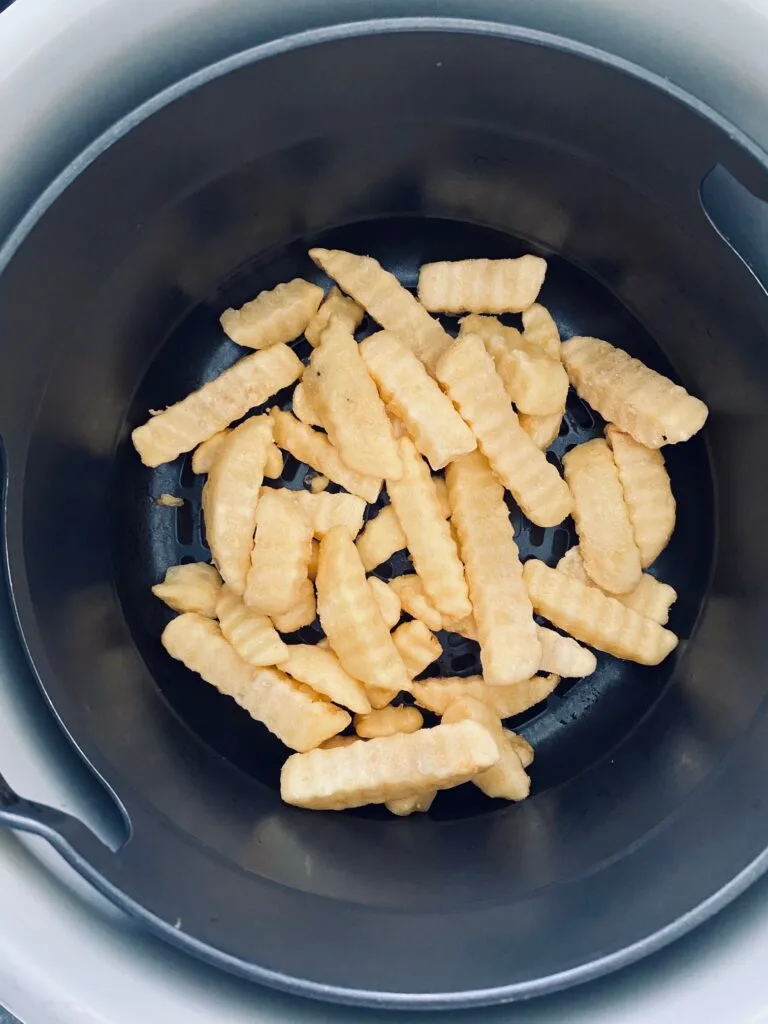
Image source: Web (Bing) / lianaskitchen.co.uk (Web image (fair-use with source credit))
Quick Answer: How to cook frozen chips in airfryer
To cook frozen chips in an air fryer, set the temperature to 200°C (400°F). Spread chips in a single layer. Cook for 10 to 18 minutes, depending on thickness.
Shake the basket halfway through. Check early to avoid overcooking.
The Problem With “Just Cook at 200°C for 15 Minutes”
A lot of generic recipes hand out one time and one temperature. Those recipes rarely factor in your specific air fryer’s wattage, the thermal design of the basket, or the thickness of the chips you actually bought. The result is a gamble.
Thin fries can scorch in 12 minutes at 200°C while chunky chips are still raw in the middle. And if you fill the basket too full, steam gets trapped and the whole batch turns limp.
There’s a safety piece people forget, too. Food safety isn’t just about colour. The USDA recommends reheating pre-cooked frozen foods like chips to an internal temperature of 74°C (165°F).
Hit that benchmark and you know the centre isn’t cold. That matters when you’re feeding kids or anyone with a weaker immune system. So the real fix is understanding exactly what changes from batch to batch.
Our blog covers more air fryer safety and troubleshooting when you need it.
The Two Variables That Actually Determine Your Cook Time
Strip it all back and the variables are simple. Your cook time depends on just two things.
1. The thickness of the frozen chip.
Thinner chips transfer heat to the centre faster. They need less time. Thicker chips take longer and often benefit from a slightly lower temperature so the outside doesn’t burn while the inside catches up.
Skip this adjustment and you’ll get a crisp shell with a cold, floury centre.
2. Your air fryer type, basket or oven.
Basket air fryers cook with intense cyclonic air from above. That means you shake the basket to redistribute the chips. Oven-style air fryers use multiple racks and a fan that pushes air across flat trays.
You can’t shake a tray without making a mess. Instead, you rotate and swap shelf positions mid-cook. Treat both machines the same way and you’ll end up with uneven results every single time.
No matter how many buttons your air fryer has, those two factors control the outcome. Once you identify what’s in your freezer and which machine is on your counter, your workflow becomes obvious.
Know Your Frozen Chip: A No-Nonsense Thickness Guide
Frozen chips aren’t all the same. A shoestring fry behaves nothing like a steak-cut chip, yet people often dump them in at identical settings. The difference is thickness.
It governs how quickly the centre cooks through, how much moisture escapes, and when the starch on the surface sets into a crust.
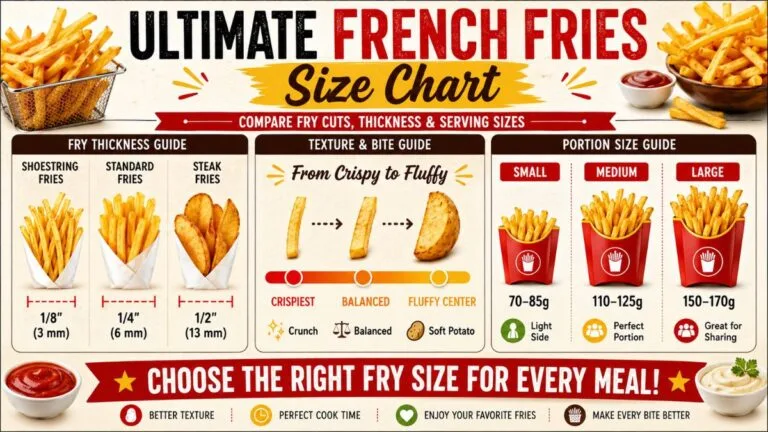
Image source: Web (Bing) / chilicravings.com (Web image (fair-use with source credit))
Here’s a quick-reference table that matches the most common frozen cuts to their typical cook windows at 200°C. Use these as a starting point and tweak for your model.
| Chip Type | Approximate Thickness | Typical Cook Time at 200°C | Notes |
|---|---|---|---|
| Shoestring & thin fries | Under 8mm | 10–12 minutes | Shake at 6 minutes. Check early; they go from golden to overdone fast. |
| Crinkle-cut fries | 8–10mm | 11–14 minutes | Ridges hold heat. Can overcook on the tips while the groove stays soft. |
| Straight-cut (standard) | 10–12mm | 13–16 minutes | The most common freezer staple. Shake at 8 minutes. |
| Chunky & steak-cut | 13mm–16mm+ | 16–22 minutes | Drop the temp to 195°C for cuts over 15mm. Shake twice during the cook. |
| Sweet potato fries | Variable, often 10–12mm | 10–14 minutes at 190°C | Higher sugar content means faster browning. Watch closely after 8 minutes. |
You’ll also notice some brands apply a thin coating of oil and starch. Those chips often crisp faster than completely uncoated ones. If you use liners or mats to protect the basket, steam can get trapped underneath.
That softens the chips rather than crisping them. We’ve looked into whether air fryer liners are safe and how they affect cooking, so you know what to expect before you buy.
Basket Air Fryer? Here’s Your Workflow (and When to Shake)
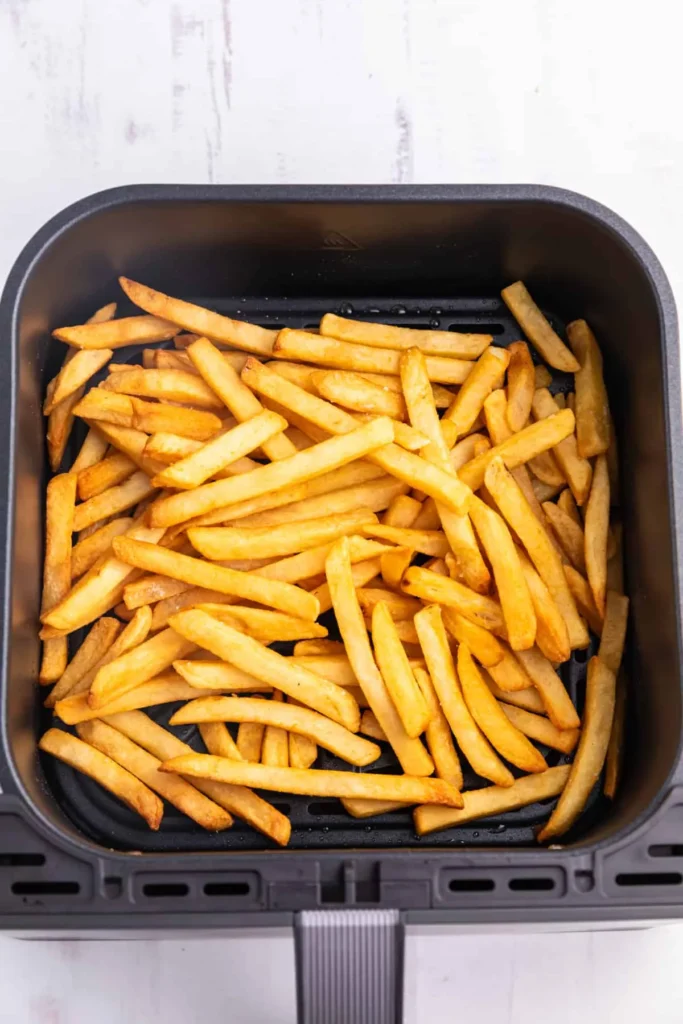
If you’ve got a pull-out basket air fryer, this is the rhythm that works. The machine relies on a concentrated blast of heat from above and a design that lets air circulate around every chip as long as the load is light enough.
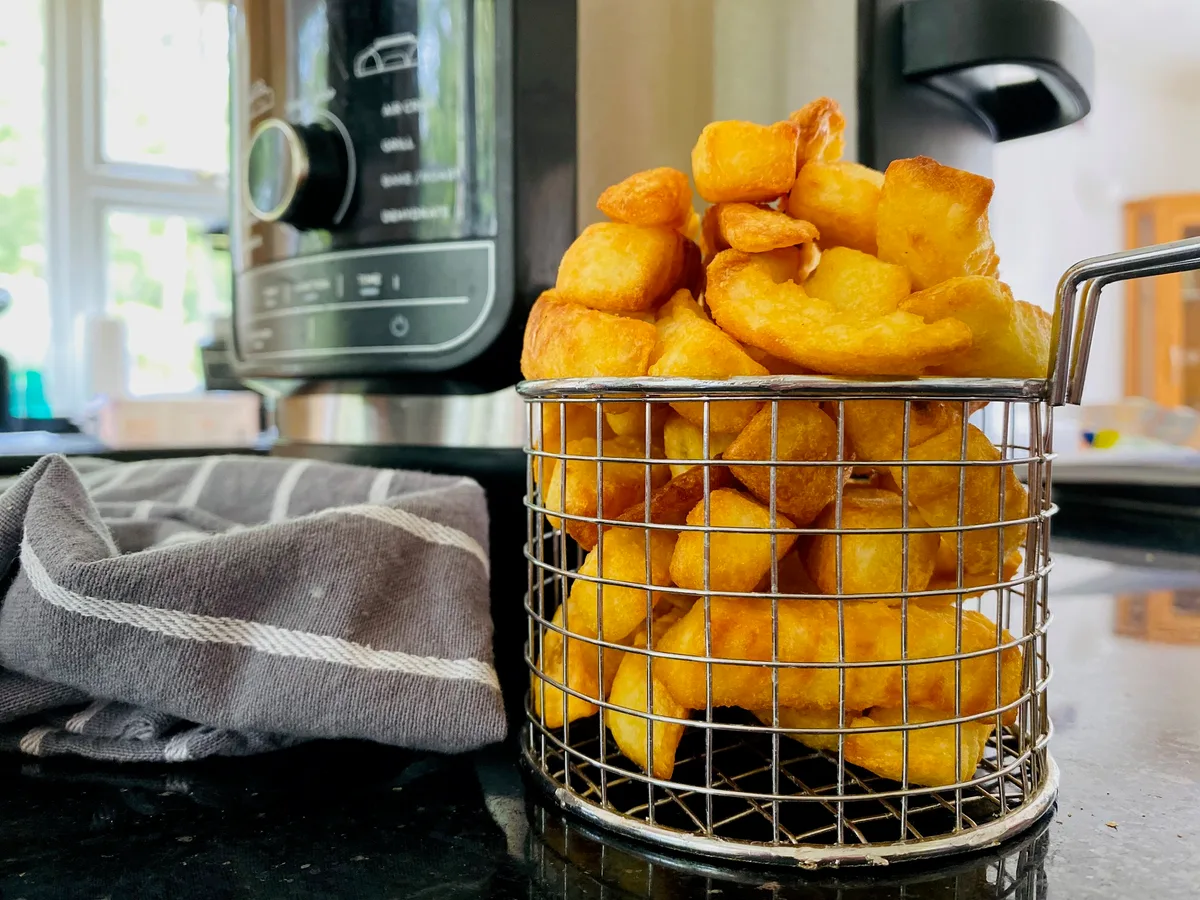
Image source: Web (Bing) / lianaskitchen.co.uk (Web image (fair-use with source credit))
Preheat when it matters.
For thin fries, let the air fryer run empty for 3 minutes at the cooking temperature. That initial blast of heat sets the crust fast. For chunky cuts, preheating is optional.
The longer cook time gives plenty of opportunity for heat to build and the slower start can actually help the centre cook without burning the outside.
Load it right.
Pour chips into the basket straight from the freezer. No need to thaw. Spread them into a single layer with a little space between pieces.
Fill the basket no more than halfway. If chips stack, steam gets trapped and you lose crispness. A typical 4-litre basket handles roughly 250g to 400g in one layer.
Set and shake.
Start at 200°C unless you’re cooking thick steak-cut chips, then use 195°C. Set a timer for half of the expected cook time. When it beeps, pull the basket out and give it a firm shake.
You want every chip to land in a new position. Slide the basket back in and let it finish. For chunky chips, shake again at the two-thirds mark.
Check early, not late.
Chip colour is your best guide. About 2 minutes before the timer ends, open the drawer and look. If the edges are deep gold and the surface looks dry and textured, you’re done.
If not, add 2 minutes and check again. A silicone mat can make cleanup easier, but make sure it’s rated for your model. We’ve covered liner safety in depth if you want to use one without muffling the airflow.
Oven-Style Air Fryer? This Is What Changes (Rotate, Don’t Shake)
Oven-style air fryers look like mini convection ovens. They use racks, not a deep basket, and the fan pushes air horizontally across the trays. You can’t shake a flat rack mid-cook without flinging chips onto the heating element.
Instead, you rotate and swap.
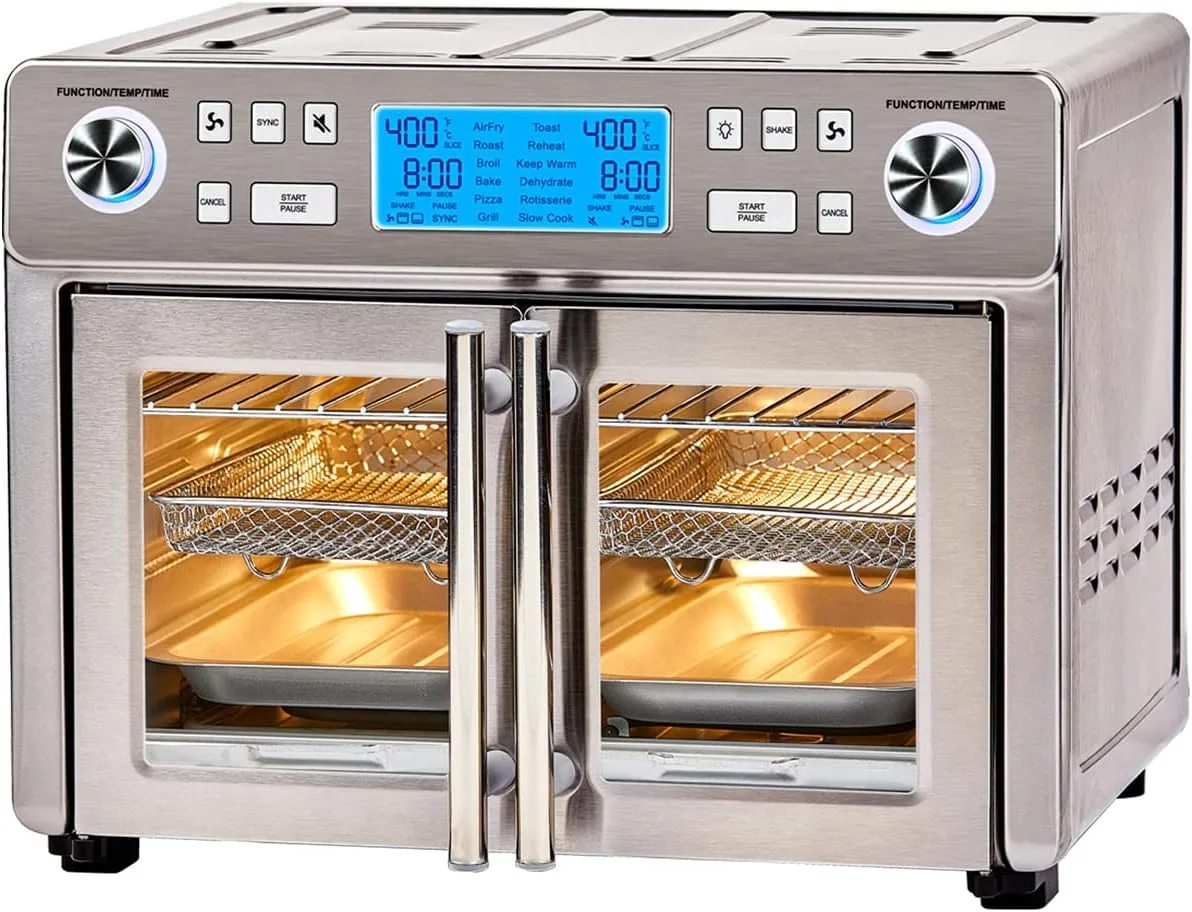
Image source: Web (Bing) / amazon.com (Web image (fair-use with source credit))
Preheat is less critical but helpful.
Most oven-style models take a little longer to reach full temperature. Letting it preheat for 3 to 4 minutes gives you a sharper start. If you skip it, just add a minute or two to the total time and check earlier.
Use the trays wisely.
Spread chips in a single layer on each mesh tray or perforated rack. Avoid piling them up. If you’re cooking on two trays at once, expect a slightly longer overall cook.
The upper tray usually receives more direct heat, so chips up top will crisp faster than those below.
Rotate at the midpoint.
Halfway through the cook, pull both trays out. Rotate each tray 180 degrees so the back edge now faces the door. Then swap the trays.
The one that was on top goes to the bottom shelf and vice versa. This one swap fixes almost all uneven browning. For thick chips, you might do a second rotation at the two-thirds mark.
Temperature and timing notes.
Oven-style air fryers can run a few degrees cooler at the chip surface than a basket model. If your chips look pale at the expected end time, increase the temperature by 5°C or leave them in for an extra 2 minutes. Always check the batch from the cooler lower shelf first.
Air flow matters outside the cavity, too. If the appliance sits under low cabinets, heat can get trapped and the oven’s thermostat may cycle off prematurely. We’ve answered whether air fryers can go under cupboards so you can set yours up without choking the vents.
Step-by-Step: Thin Fries, Shoestrings, and Crinkle Cuts
Thin cuts surrender their moisture fast. That means the window between golden crisp and burnt is narrow. The core task is trapping surface texture before the inside dries out.
Start with a preheated basket at 200°C. Spread the fries in one loose layer. A 4-litre basket holds about 300g comfortably.
Spray lightly with an oil mister if you want extra crunch. Close the drawer and set a timer for 6 minutes. At the halfway mark, pull the basket and shake it hard.
The fries should already look pale gold. Return them and continue cooking for another 4 to 6 minutes. Shoestrings often finish at the 10-minute mark.
Crinkle cuts, with their thicker ridges, take closer to 12. Open the drawer at 10 minutes and pinch-test a fry. If it snaps rather than bends, you’re done.
Dump them onto a plate immediately. Leaving them in the hot basket off the heat steams the bottom layer.
Step-by-Step: Chunky, Steak-Cut, and Extra-Thick Chips
Thick chips need heat penetration before they need colour. A blazing 200°C from the start can blacken the corners while the centre stays raw. Drop the temperature to 195°C for anything above 15mm.
Line the basket with a single layer of chips straight from the freezer. Don’t crowd them. Cook for 8 minutes, then shake the basket or rotate the trays.
Let them run another 8 minutes. At the 16-minute mark, open and inspect. Most extra-thick cuts need 18 to 22 minutes in total.
Use the visual check: a deep, even gold on all sides. If the edges look dark but the centre feels soft under a fork, lower the temperature by 5°C for the next batch. That lets the core catch up without torching the crust.
Chips cooked at the right pace sound hollow when tapped.
Sweet Potato Chips: Why They Burn Faster and How to Adjust
Sweet potato has more natural sugar than white potato. That sugar caramelises and then scorches quickly in an air fryer’s dry, intense heat. The same 200°C that makes russet fries golden turns sweet potato fries from brown to bitter in under a minute.
Keep the temperature at 190°C. Preheat isn’t essential, but a brief 2-minute warm-up helps set the oil layer. Spread the chips in a single layer and set the timer for 5 minutes.
After the shake, check every 2 minutes. The edges will darken first. You want a deep amber, not black.
Most frozen sweet potato fries cook through in 10 to 14 minutes total. If you’re cooking a mixed batch of russet and sweet potato, do them separately. The sugar in one will burn before the other even crisps.
A light mist of oil helps, but skip sugary glazes entirely.
The Mid-Cook Shake and Rotate: Why Skipping It Ruins Everything
Air fryers cook with moving air, not magic. The chips on the bottom stay cooler and wetter. Those pressed against the basket edges get blasted with direct heat.
Shaking or rotating mid-cook is the only way to give every piece an equal shot at crispness.
In a basket model, the chips in the centre of the pile steam each other. A single shake at the midpoint breaks up those pockets and redistributes the load. For thick cuts, a second shake at the two-thirds mark is worth the few seconds it takes.
In an oven-style air fryer, rotating the trays 180 degrees and swapping shelf positions forces the cooler tray into the hotter zone. Skip this step and you’ll eat a plate of half-crunchy, half-floppy chips every time. The quality gap is that stark.
Treat the mid-cook check as part of the cook time, not an interruption.
Cooking for More Than Two? A Batch Strategy That Actually Works
A standard 4-litre basket holds roughly two generous servings per batch. For three or four people, you’ll need to stagger your cooking. The good news: air-fried chips stay crisp for a few extra minutes if you handle them right.
Cook the first batch as normal and tip it onto a wire rack set over a baking sheet. Never pile hot chips into a bowl. The trapped steam kills the crisp.
Slide the rack into a low oven at about 100°C to hold the chips while the next batch cooks. The dry heat keeps the crust intact. When the second batch finishes, combine them and serve immediately.
If your air fryer has a large 5.5-litre drawer, you can cook up to 500g in one go if you shake twice and accept a slightly longer cook time. For bigger gatherings, factor in about 10 to 12 minutes per batch and plan accordingly. Preheating between loads keeps the recovery time short.
The Visual, Sound, and Touch Doneness Check (Not Just a Timer)
A timer gives you a ballpark. Your senses tell you when the chips are actually ready. Relying on minutes alone is how you end up with a pale, limp batch or one that’s already bitter and overdone.
Look for an even deep gold colour across every chip. The surface should look dry and textured, not wet or glossy. Listen for a crisp rustle when you shake the basket.
Damp chips thud. Ready chips sound like dry leaves. Then grab one and give it a quick squeeze.
It should feel firm and snap under light pressure. A chip that bends without breaking still has moisture trapped inside. The internal temperature should steam throughout.
The USDA sets 74°C as a safe reheat point for pre-cooked frozen foods. If you’re unsure, a quick-read probe gives you certainty.
Three Mistakes That Turn Frozen Chips Soggy or Scorched
Most chip failures trace back to one of three missteps. Fix these and your results turn consistent overnight.
Overcrowding the basket. A packed basket blocks airflow. Steam builds and the chips boil in their own moisture. Keep a single layer with gaps.
For a 4-litre basket, 300g is the sweet spot. If you need more, cook in batches.
Skipping the shake or rotation. Without that mid-cook movement, the bottom chips stay pale and the top ones burn. It adds seconds to your routine and is non-negotiable.
Salting before cooking. Salt draws moisture to the surface. That moisture turns to steam and softens the crust. Always season after the chips leave the basket.
Seasoning Without Ruining Your Crisp: The Post-Cook Rule
Hot chips straight from the air fryer have a dry, blistered surface that holds seasoning beautifully. Add salt, vinegar powder, or spice the moment they hit the plate. The residual heat helps it cling without pulling out moisture.
Skip wet sauces until the last second. Ketchup, mayo, or gravy should go on the side for dipping. Drizzling them over the batch will steam the crust and undo all your work.
If you like a flavoured coating, toss the chips in a dry rub. Paprika, garlic powder, and a pinch of cayenne work fast. Toss gently and serve at once.
Chips lose their crunch within a few minutes. You can’t pause the clock once they hit the serving bowl. If you’re curious about other ways to protect your air fryer while cooking, we’ve examined whether liners affect crispness and safety in detail.
FAQs: Preheat, Overcrowding, Oil, Sticking, and Parchment Liners
Do I really need to preheat my air fryer for frozen chips?
Preheating helps thin fries and shoestrings develop an instant crust. It’s less critical for chunky chips that need a slower start. Run the empty basket for 3 minutes at the cooking temperature when you want maximum crunch.
Skip it if you’re short on time and cooking thick cuts.
How full can I fill the basket?
Fill no more than halfway. A single layer with some visible space between chips lets air circulate. Overloading steams the food.
For a 4-litre capacity, stick to 250g to 400g per batch. Double portions need a second cook cycle.
Should I use oil on frozen chips?
Most frozen chips arrive pre-coated with a thin oil and starch layer. You can cook them dry and still get a decent crisp. A light mist of high-smoke-point oil from a refillable mister adds extra crunch.
Avoid propellant-based sprays. They degrade non-stick basket coatings over time.
Why do my chips stick to the basket?
Sticking happens when the basket isn’t hot enough at the start or when chips are overcrowded and steam bonds them to the surface. Preheat the basket. Spread chips loosely.
If sticking persists, a perforated parchment liner with holes for airflow can help. Per the UK Food Standards Agency, always ensure frozen foods are piping hot throughout before serving.
Are parchment liners safe to use?
Yes, when used correctly. Choose perforated liners designed for air fryers. They catch debris without blocking airflow.
Never add a liner during preheating without food weighing it down. A lightweight liner can fly up into the heating element and burn. We’ve covered liner safety in more detail for anyone who wants the full rundown.
Your Fridge-Door Cheat Sheet: A Decision Workflow for Any Chip and Air Fryer
Here’s the quick-reference logic you can pin to the fridge. No memorising needed.
If you have a basket air fryer:
- Thin fries / shoestrings / crinkle cuts: 200°C, 10-12 min, shake at 6 min.
- Chunky / steak-cut chips: 195°C, 16-22 min, shake at 8 min and again at 14 min.
- Sweet potato fries: 190°C, 10-14 min, shake at 5 min, check every 2 min after.
If you have an oven-style air fryer:
- Same temperature steps above. Use single layers on trays.
- Rotate trays 180° and swap shelves at the midpoint.
- For thick cuts, rotate and swap a second time.
For every batch:
- Don’t overcrowd.
- Don’t salt until after cooking.
- Check with your eyes and ears, not just the timer.