
You’re staring at last night’s takeout, wondering if you can just toss the whole container in the air fryer to reheat it. It’s a tempting shortcut, but the answer to “can you put plastic in air fryer” appliances is almost always a hard no. The short version: unless your container is explicitly labeled oven-safe and made from a specific type of plastic, you’re risking melted messes, chemical exposure, and a ruined appliance.
Here’s the thing that surprises most people. Air fryers don’t just heat food from below like a conventional oven. They blast hot air at high speed, which means the entire cooking chamber, including the walls and ceiling, gets scorching hot.
Most plastic containers are only rated to withstand temperatures between 200°F and 250°F. Your air fryer’s heating element can reach 400°F or higher. That gap is where the trouble starts.
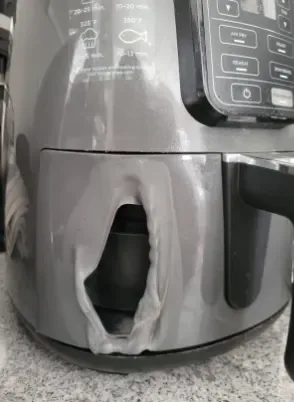
Image source: Web (Bing) / airfryingfaqs.com (Web image (fair-use with source credit))
Quick Answer
No, you should not put plastic in an air fryer. The high heat melts most plastics. Melting releases chemicals into your food.
It also ruins your appliance basket. Only use oven-safe glass, ceramic, or silicone. Check the bottom of containers for a heat-safe symbol first.
The Heat Factor: Why Air Fryers Are Different From Microwaves
Microwaves work by agitating water molecules inside food. The container itself stays relatively cool, which is why you can microwave in plastic without immediate disaster. Air fryers work completely differently.
A heating element at the top of the unit generates intense radiant heat, while a powerful fan circulates that hot air around the cooking chamber at high speed.
That circulating air is the problem. It’s not just warm; it’s aggressively hot. The air temperature inside an active air fryer typically sits between 350°F and 400°F, and the heating element itself can run significantly hotter than that.
When you place plastic in that environment, it’s not slowly warming up the way it might in a microwave. It’s being bombarded with dry, convective heat from every direction simultaneously.
Here’s a comparison to put it in perspective. Most plastics begin to soften around 212°F. They start melting anywhere between 250°F and 350°F, depending on the type.
Your air fryer’s minimum cooking temperature is usually around 180°F, but most recipes call for 350°F or higher. Even on the lowest setting, you’re operating dangerously close to the failure point of most plastic containers.
Add in the preheat cycle, and the risk climbs even higher. The heating element cycles on and off to maintain temperature, and during those on cycles, it can briefly exceed 500°F at the element surface. If a plastic container shifts, tilts, or touches that element directly, it will melt on contact.
This isn’t a theoretical concern. Aggregate reviews and manufacturer safety documentation consistently warn about this exact failure mode.
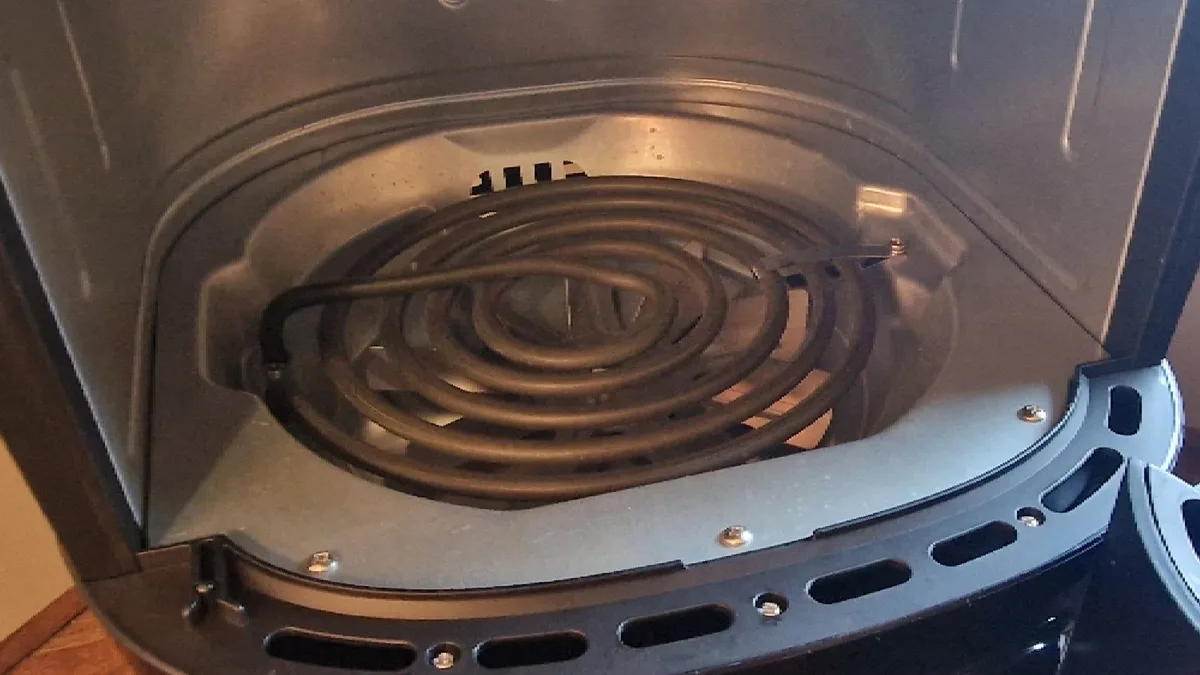
Image source: Web (Bing) / storage.googleapis.com (Web image (fair-use with source credit))
What Actually Happens When Plastic Gets Hot
When plastic hits high heat, it doesn’t just melt all at once. There’s a progression that happens, and understanding it helps you spot trouble before it becomes a disaster.
At around 160°F to 200°F, you’ll notice the container starting to soften. Corners lose their crispness. The plastic becomes slightly pliable, and thin walls might start to bow inward.
At this stage, the container won’t necessarily look damaged, but the structure is already compromised.
Between 250°F and 350°F, things get serious. The plastic begins to warp noticeably. Edges curl up.
The container might start sticking to the air fryer basket. Depending on the specific polymer, this is also the temperature range where chemical constituents start migrating out of the plastic and into any food it’s touching. That’s a bigger deal than most people realize, because these aren’t just inert materials.
Many plastics contain plasticizers, stabilizers, and other additives that aren’t meant to enter your body.
Once you cross 350°F, you’re in full-melt territory. The plastic liquefies, and it will flow into every gap, seam, and perforation in your air fryer basket. It bakes onto the metal surface, and once it cools, it’s a nightmare to remove.
Scraping it off can damage the nonstick coating, which means your basket might never be safe to use again.
There’s also the smoke factor. Burning plastic produces acrid, toxic fumes. Inhaling those fumes, even briefly, can cause coughing, throat irritation, and headaches.
In a confined kitchen with limited ventilation, the smell lingers for hours. In our research, this is actually the most common complaint from people who’ve accidentally melted plastic in an air fryer. They didn’t just lose a container.
They had to air out the whole kitchen and scrub the basket for days.
The Plastic Rating System: Decoding the Triangle Symbols
Most plastic containers have a small triangle symbol stamped on the bottom, usually with a number inside. That number tells you what type of plastic you’re dealing with. It also gives you a rough idea of its heat tolerance.
Here’s a quick reference table based on common plastic identification codes and their typical heat resistance:
| Resin Code | Plastic Type | Common Uses | Typical Melting Point |
|---|---|---|---|
| #1 | PET or PETE | Water bottles, soda bottles, salad containers | 480°F (but warps much earlier) |
| #2 | HDPE | Milk jugs, detergent bottles, some reusable containers | 270°F |
| #3 | PVC | Cling wrap, some food trays | 280°F |
| #4 | LDPE | Grocery bags, squeeze bottles, some food wraps | 230°F |
| #5 | PP (Polypropylene) | Takeout containers, yogurt cups, reusable food storage | 320°F |
| #6 | PS (Polystyrene) | Foam trays, disposable cups, some clamshells | 210°F |
| #7 | Other | Mixed plastics, polycarbonate, bioplastics | Varies widely |
Heres the critical thing to understand. Even if a plastic’s melting point seems above your air fryer’s temperature, it will likely soften and warp at temperatures well below that melting point. Polypropylene, which is the best of the common food plastics, starts losing its shape around 250°F.
That’s still well below what your air fryer is going to reach.
When you’re examining a container, you’re looking for two things. First, the resin code. Second, any explicit labeling that says “oven-safe” or “heat-safe up to XXX°F.” If neither is present, assume the plastic is not safe for air fryer use.
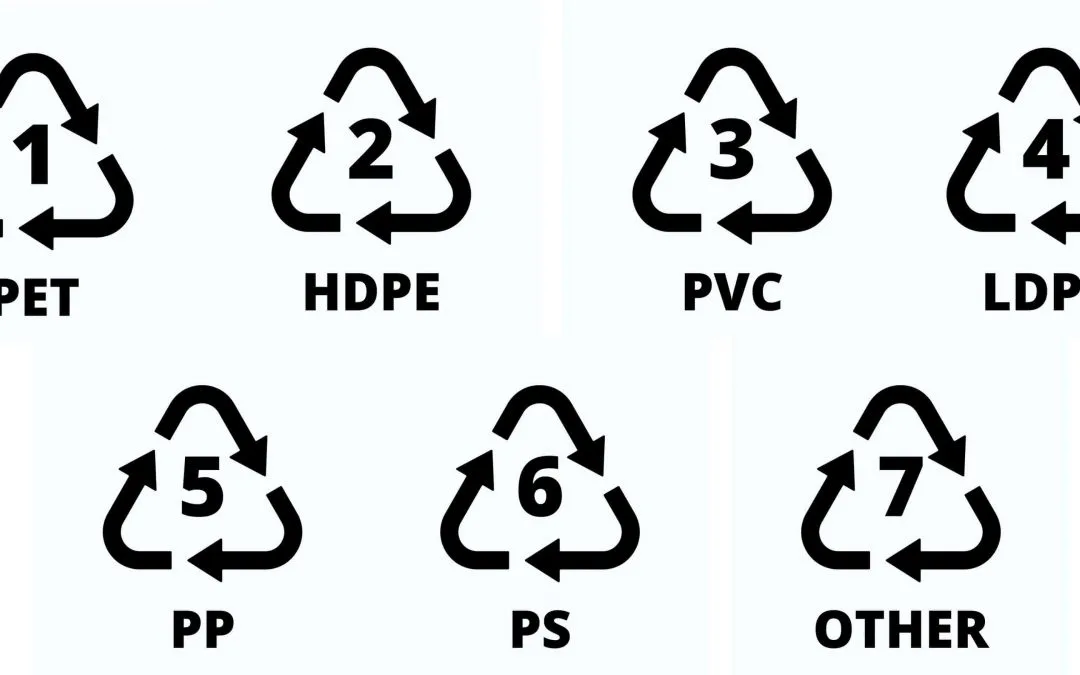
Image source: Web (Bing) / narodnatribuna.info (Web image (fair-use with source credit))
The Real Risks: Melting, Leaching, and Toxic Fumes
The Mess You’ll Have to Clean Up
When plastic melts onto an air fryer basket, it’s not coming off easily. The molten material bonds with the nonstick coating at a chemical level. Scrubbing with soap and water does nothing.
Even heavy-duty degreasers struggle to break the bond. You’ll end up scraping, which inevitably damages the coating underneath.
Once the nonstick surface is scratched or gouged, two things happen. Food starts sticking to the basket, and the coating can begin flaking into your meals. At that point, the basket is essentially compromised, and most manufacturers recommend replacement.
Chemical Leaching Into Your Food
This is the risk that doesn’t get enough attention. Even when plastic doesn’t melt, heat can accelerate the transfer of chemicals from the container into the food it holds. Substances like bisphenol A and phthalates are used in some plastics as hardening agents and plasticizers.
They’re not chemically bonded to the plastic matrix, which means they can migrate out under the right conditions.
Heat and fatty foods are the two factors that accelerate this process. Air fryers provide both in spades. Hot oil, rendered fat, and high temperatures create the perfect storm for chemical migration.
The FDA regulates food-contact materials, but those regulations assume you’re using the plastic for its intended purpose, which typically doesn’t include exposure to 400°F air currents.
When It Starts Smoking: The Fire Hazard
If plastic gets hot enough to smoke, you have a potential fire on your hands. The smoke itself is toxic, but the bigger concern is what’s happening at the heating element. Plastic vapors can ignite when they contact a surface that’s hot enough.
The result is a flare-up inside the cooking chamber that can spread quickly.
For guidance on food contact materials and the regulations around heat exposure, the FDA’s food contact substances program is the primary standard. Their documentation outlines which materials are approved for food contact and under what conditions, and those conditions rarely include air fryer temperatures.
How to Safely Check If Your Container Is Air Fryer-Ready
Here’s the step-by-step process to determine if a specific container can survive your air fryer.
First, flip the container over and find the resin identification code. Look for a triangle with a number in the middle. If it’s #5 polypropylene, you’re dealing with the most promising common plastic.
If it’s anything else, stop right there and move on to the next step.
Second, look for explicit temperature labeling. Some reusable containers have a small symbol that looks like an oven with heat waves rising from it. That means the manufacturer has tested the product for oven use.
Containers with this symbol also list a maximum safe temperature somewhere on the label or the bottom. If that number is below 400°F, your air fryer is going to exceed it.
Third, consider the container’s condition. Cracks, clouding, and warping are all signs that a container has already been stressed by heat. Damaged plastic leaches chemicals more readily than intact plastic.
When in doubt, throw it out and use something you know is safe.
Fourth, and this is the one people skip, consider the food itself. Even if your container has a high heat rating, greasy foods can cause localized hot spots. The plastic directly under a piece of bacon or a chicken thigh is going to be hotter than the surrounding area.
That creates uneven heating and premature failure points.
If your container passes all four checks, an oven-safe glass container is still the better choice in most cases. The one scenario where plastic might hold up is reheating dry, non-greasy food at a lower temperature setting, like 250°F or below. But even then, you’re operating close to the material’s structural limits, and it only takes one over-ambitious preheat cycle to turn your lunch into a molten disaster.
For everyday reheating, your options are glass, ceramic, silicone, or simply transferring the food onto the air fryer basket directly. Each of those has its own quirks, and we’ll cover the best alternatives in detail. But the baseline rule is simple.
If you’re not certain a container is air fryer-safe, it isn’t. Use something you know will hold up, or you’ll end up with a ruined meal, a ruined container, and potentially a ruined appliance. And if you’re new to air frying, it’s worth checking our beginner tips over on the blog to steer clear of obvious pitfalls.


